
Views: 0 Author: Site Editor Publish Time: 2026-09-01 Origin: Site


Deciding to invest in commercial energy storage is no longer just about corporate sustainability goals. Today, it serves as a core strategy for peak demand shaving, grid resilience, and profitable energy arbitrage. You face a notoriously complex procurement stage when evaluating these multi-decade assets. The market currently offers highly diverse technologies. Selecting the wrong chemistry or framework easily leads to stranded assets, safety liabilities, or poor financial returns. This decision carries heavy capital implications. You need a robust approach to navigate this fragmented landscape. This article moves past basic definitions to give you a commercially focused evaluation framework. You will learn how to analyze the four main categories of energy storage effectively. We base this detailed evaluation on operational realities, lifecycle costs, and rigid site constraints. You will walk away knowing exactly how to match the right storage asset to your specific business outcomes.
Electrochemical systems offer the highest deployment flexibility and modularity, making them the standard for commercial peak shaving and short-duration backup.
Mechanical and Thermal systems require significant upfront capital and specific site conditions but deliver superior Levelized Cost of Storage (LCOS) for long-duration, utility-scale needs.
Chemical storage provides unmatched energy density for seasonal storage but currently faces infrastructure and round-trip efficiency challenges.
Procurement decisions must be driven by use-case specific metrics, balancing upfront CAPEX against round-trip efficiency, degradation rates, and safety compliance (e.g., NFPA 855).
You cannot procure Energy Storage Systems based on specifications alone. You must define clear success criteria before approaching vendors. Every business possesses unique energy consumption patterns. Identifying your primary use case is the crucial first step. You need to differentiate between power-dense applications and energy-dense applications.
Power-dense scenarios demand short, intense bursts of electricity. You typically use them for frequency regulation or rapid emergency backup. In contrast, energy-dense applications require sustained power over many hours. They support load shifting and long-duration site resilience.
Once you clarify the use case, you must establish strict financial baselines. Simply comparing upfront Capital Expenditure (CAPEX) creates a distorted financial picture. You should instead evaluate the Levelized Cost of Storage (LCOS). LCOS accounts for all lifetime costs divided by the total usable energy discharged. It provides a much more accurate profitability metric.
Furthermore, you must acknowledge hard site constraints immediately. You might find a technology financially attractive on paper. However, spatial footprint limitations can rule it out entirely. Environmental conditions and strict local zoning regulations often disqualify certain installations. You must map these constraints early to avoid wasted procurement cycles.
Define the load profile: Map your facility's peak demand intervals precisely.
Assess space availability: Measure both indoor and outdoor footprint allowances.
Calculate LCOS thresholds: Determine the maximum acceptable cost per megawatt-hour to maintain profitability.
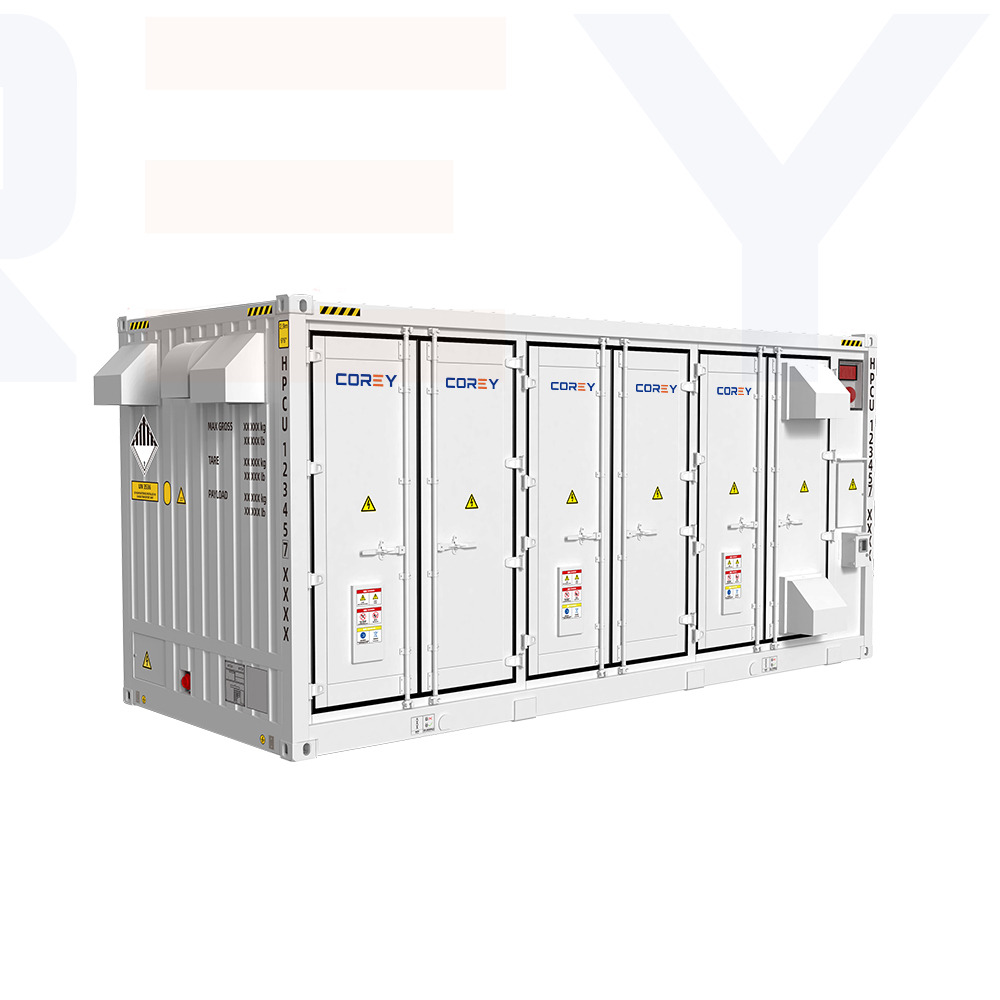
An Electrochemical solution usually provides the most flexible deployment options for commercial buyers. These battery systems dominate modern behind-the-meter installations. They offer excellent modularity. You can scale them easily as your energy needs grow.
Lithium-ion batteries represent the industry standard for commercial applications. They present a compelling business case for behind-the-meter deployments. You get exceptionally fast response times. This makes them perfect for peak demand shaving. By discharging energy during utility peak pricing hours, you drastically reduce demand charges.
However, you must manage several distinct risks. Supply chain volatility frequently impacts battery pricing and delivery timelines. These batteries also suffer from inevitable degradation over repeated charge cycles. Furthermore, they carry severe thermal runaway risks. You are legally required to install stringent, often expensive, fire suppression systems to deploy them safely indoors.
Flow batteries utilize large tanks of liquid electrolytes to store energy. Their business case shines in long-duration scenarios. They remain highly favorable for operations requiring four to ten hours of continuous discharge. Unlike standard batteries, flow batteries decouple power from energy capacity. You can increase energy storage simply by adding larger tanks. You do not need to buy more power stacks.
Despite these advantages, you face notable implementation risks. Flow batteries demand a much larger physical footprint. They also require higher initial CAPEX compared to standard lithium models. Maintenance proves complex. Your facility team must service industrial pumps, valves, and corrosive liquid electrolytes regularly.
Lead-acid batteries offer a proven, low-cost baseline technology. Their primary business case centers on simple uninterruptible power supply (UPS) needs. You should consider them when facility weight and space are completely unconstrained. They provide reliable backup for critical data centers and industrial controls.
The main risks include a notoriously short operational lifespan. They also possess strict depth-of-discharge (DoD) limitations. If you discharge them too deeply, you will destroy the battery prematurely. You must cycle them carefully to maintain their viability.
When you need grid-scale capacity, standard batteries often fall short. You must look toward Mechanical and Thermal approaches. These massive setups require heavy upfront capital. However, they capitalize on immense scale and longevity to deliver unparalleled lifecycle economics.
Pumped hydro absolutely dominates utility-scale grid balancing today. The business case relies on massive volumetric capacity. You gain an asset life spanning several decades. It offers an incredibly low cost per megawatt-hour at scale. Flywheels serve a very different mechanical purpose. They provide critical, instantaneous frequency regulation. They manage this without any chemical degradation over millions of cycles.
The risks are highly specific. Pumped hydro remains strictly geography-dependent. You need access to specific elevation changes and water resources. It also requires massive, multi-year environmental permitting. Flywheels, conversely, offer extremely limited duration. They provide only minutes of discharge time before needing to spin up again.
Thermal systems store energy by heating or cooling specific mediums. The business case is highly effective for facilities with large HVAC loads. You can integrate ice storage with existing cooling systems. This allows you to shift heavy cooling loads to cheaper off-peak hours. Molten salt integrates perfectly with concentrated solar power. It retains immense heat to drive turbines long after sunset.
These systems carry parasitic heat loss risks over time. You cannot store the thermal energy indefinitely. Furthermore, this technology remains largely restricted. You can only justify it for facilities possessing heavy, centralized thermal management needs. It does not provide flexible electrical output for general appliances.
Table 1: Response Time vs. Duration Suitability
Storage Category | Typical Response Time | Optimal Discharge Duration | Primary Commercial Use Case |
|---|---|---|---|
Lithium-Ion | Milliseconds | 1 to 4 Hours | Peak Shaving / Frequency Support |
Flow Batteries | Seconds | 4 to 10 Hours | Long-Duration Load Shifting |
Flywheels | Instantaneous | Seconds to Minutes | Grid Frequency Regulation |
Ice Storage | Minutes | 6 to 12 Hours | HVAC Load Shifting |
Emerging seasonal demands require entirely new strategies. Chemical storage answers this call by converting electrical power into stable, storable molecules. This category focuses heavily on long-term resilience.
The primary business case revolves around converting surplus renewable energy into green hydrogen. You achieve this via advanced electrolysis. Hydrogen provides a realistic pathway for true seasonal energy storage. You can store the gas in massive underground caverns for months. It also helps decarbonize heavy industry by replacing fossil fuels directly in manufacturing processes.
However, you face severe efficiency risks today. The conversion process currently yields very low round-trip efficiency. You often retain below 40% of the original electrical energy. You also face high equipment costs. Electrolyzers and specialized fuel cells require massive capital outlays. Additionally, you must fund specialized infrastructure requirements. Safe gas handling, extreme compression, and pipeline distribution remain incredibly expensive hurdles.
You must evaluate multiple technical dimensions to guarantee ROI. Selecting a system based purely on vendor marketing will harm your bottom line. You need a rigorous framework to match the specific technology to your intended business outcomes.
Many buyers incorrectly focus entirely on the initial purchase price. You must evaluate the Levelized Cost of Storage (LCOS) instead. LCOS measures the total expense of building and operating the asset over its lifespan. You must calculate operating expenses (OPEX), continuous maintenance, and replacement modules. You must also factor in the asset's chemical degradation curves. Finally, you must account for eventual decommissioning or recycling costs. A system with a low CAPEX might possess a terrible LCOS if it requires frequent cell replacements.
Round-trip efficiency dictates your actual usable power. You must carefully assess the energy lost during the complete charge and discharge cycle. If a system claims 85% efficiency, you lose 15% of the power you purchased to charge it. This directly impacts arbitrage profitability. If you buy grid power at low rates to sell back later, high energy losses will destroy your financial margin. You must select high-efficiency units for daily trading applications.
Safety regulations strictly dictate where and how you can deploy these assets. You must detail the absolute necessity of meeting UL 9540 standards. Navigating local fire codes proves particularly challenging for indoor installations. Densely populated commercial deployments face intense scrutiny. Fire marshals may demand costly explosion-proof enclosures or massive setback distances. You must confirm regulatory compliance during the preliminary design phase.
Hardware represents only half of the solution. The physical storage is only as effective as the Energy Management System (EMS) driving it. You rely on software to monitor grid pricing and facility loads. The system must intelligently forecast these loads using predictive algorithms. It must dispatch energy autonomously to maximize your savings. A poor EMS will fail to discharge the battery during a peak demand spike. This failure costs you thousands of dollars in a single billing cycle.
Chart 1: Lifecycle Evaluation Matrix
Evaluation Metric | Why It Matters | Primary Impact Area |
|---|---|---|
LCOS | Captures true per-kWh cost over decades. | Long-term ROI and Budgeting |
Round-Trip Efficiency | Determines energy lost during cycling. | Arbitrage Profitability |
Degradation Rate | Shows capacity loss over useful life. | Module Replacement OPEX |
EMS Capability | Controls automated dispatch decisions. | Peak Shaving Accuracy |
Moving from evaluation to procurement involves substantial implementation risks. You must vet your partners carefully to avoid costly construction delays. The right execution strategy protects your capital investment.
We strongly recommend vetting your Engineering, Procurement, and Construction (EPC) partners thoroughly. You must evaluate them based on their specific track record. Do not hire a solar EPC to install a complex flow battery without verifying their storage credentials. Ask for case studies involving the exact storage category you intend to deploy. Ensure they understand local permitting requirements deeply.
You should strongly advocate for pilot deployments initially. A phased rollout strategy mitigates massive financial exposure. Start with a smaller modular scaling approach where possible. This proves particularly valuable when testing newer electrochemical chemistries. It allows you to verify the EMS software accuracy before committing millions to a full-facility backup system.
You must take immediate, data-driven actions to start this process. First, finalize your load profile data. You need at least twelve months of interval meter data from your utility provider. Second, define your spatial availability clearly. Engage a structural engineer if considering rooftop deployments. Finally, issue Request for Proposals (RFPs) focused heavily on guaranteed performance metrics. Do not issue RFPs based just on hardware specs. Force the vendors to guarantee the LCOS and uptime.
No single type of energy storage is universally superior for every business. The viability of any system is entirely dependent on your commercial use case, facility load profile, and physical site footprint. You must align the technology with your financial constraints.
Embrace modular agility: Choose electrochemical systems when you need rapid response times and scalable behind-the-meter peak shaving.
Leverage massive scale: Investigate mechanical and thermal frameworks only when you require utility-scale longevity and possess the necessary site conditions.
Plan for the future: Monitor chemical storage developments to meet emerging seasonal demands and deep decarbonization mandates.
Prioritize software integration: Ensure your EMS can autonomously dispatch energy to maximize your daily arbitrage and demand reduction goals.
Do not finalize any capital expenditure based on generalized assumptions. We encourage all decision-makers to conduct a rigorous, site-specific feasibility study immediately. Engage a specialized energy consultant to analyze your historical load data. Let the data dictate your final procurement strategy.
A: Lithium-ion electrochemical systems typically offer the fastest and most predictable ROI. When paired with advanced peak-shaving software, they dramatically lower expensive utility demand charges. They install quickly, scale easily, and operate autonomously. This combination ensures predictable payback periods, especially in regional markets suffering from highly volatile peak pricing structures.
A: Electrochemical maintenance is largely software-heavy. You monitor cell degradation digitally and occasionally perform modular battery replacements. Mechanical storage requires traditional industrial servicing. You must regularly inspect heavy bearings, lubricate moving parts, monitor hydraulic pumps, and conduct fluid checks. Flow batteries share mechanical traits, requiring active pump and valve maintenance for the liquid electrolytes.
A: Strict urban fire codes profoundly impact your technology choice. Certain battery chemistries pose thermal runaway risks. Fire marshals often mandate large physical setbacks, blast walls, or highly costly fire suppression systems indoors. These rigid safety compliance costs can ruin the project's financial viability, sometimes shifting the economic advantage toward safer thermal or flow battery alternatives.


