
Views: 0 Author: Site Editor Publish Time: 2026-09-07 Origin: Site


Rising peak demand charges and grid instability create massive pressure for modern facilities. Strict ESG compliance targets only add to this burden. Commercial and industrial leaders can no longer act as passive energy consumers. You must transition into an active energy manager to stay competitive and secure your operations.
The market currently overflows with bold claims about battery storage capabilities. Yet, successful deployment requires looking past this marketing hype. Procuring the right setup means understanding fundamental architecture. You also need to anticipate hidden integration risks before you sign a contract.
This guide strips away complex marketing jargon. We will explain core mechanics, outline commercial success criteria, and provide a reliable evaluation framework. You will learn exactly how to choose the right hardware, software, and partners. Mastering these basics will help you turn your facility into a resilient, optimized energy asset.
A viable BESS is not just a battery; it is a complex integration of physical cells, power conversion hardware, and intelligent energy management software.
High-ROI outcomes depend on matching specific BESS applications (e.g., peak shaving, microgrid resilience, solar integration) to exact facility load profiles.
Evaluating a BESS supplier requires rigorous scrutiny of safety certifications, warranty degradation curves, and long-term operational software (EMS) capabilities.
Implementation carries tangible realities: upfront CAPEX, thermal management requirements, and grid interconnection timelines must be accurately modeled.
Many buyers incorrectly assume a battery system is merely a large box of chemical cells. To clarify what is BESS, we define it as a highly integrated hardware and software ecosystem. It stores electrical charge and dispatches it strategically to maximize financial return and operational resilience.
Understanding the internal architecture is your first step toward confident procurement. Every BESS battery system relies on four interconnected pillars. A failure in one compromises the entire installation.
A true commercial storage asset requires precision engineering at multiple levels.
Battery Modules & Racks: This serves as the physical foundation of your asset. Most modern commercial systems use Lithium-ion cells, specifically Lithium Iron Phosphate (LFP). LFP dictates your energy density, physical footprint, and baseline thermal stability.
Battery Management System (BMS): Consider this your critical safety layer. The BMS continuously monitors individual cell voltage and ambient temperature. It actively balances charging rates across modules to prevent dangerous conditions like thermal runaway.
Power Conversion System (PCS): Batteries store Direct Current (DC) energy, but your facility uses Alternating Current (AC). The PCS is a bi-directional inverter system bridging this gap. The quality of your PCS directly dictates your round-trip efficiency and limits energy loss during conversion.
Energy Management System (EMS): The EMS acts as the financial brain of the operation. It uses complex algorithms to decide exactly when to charge or discharge. It bases these decisions on real-time utility rates, facility demand spikes, and grid conditions.
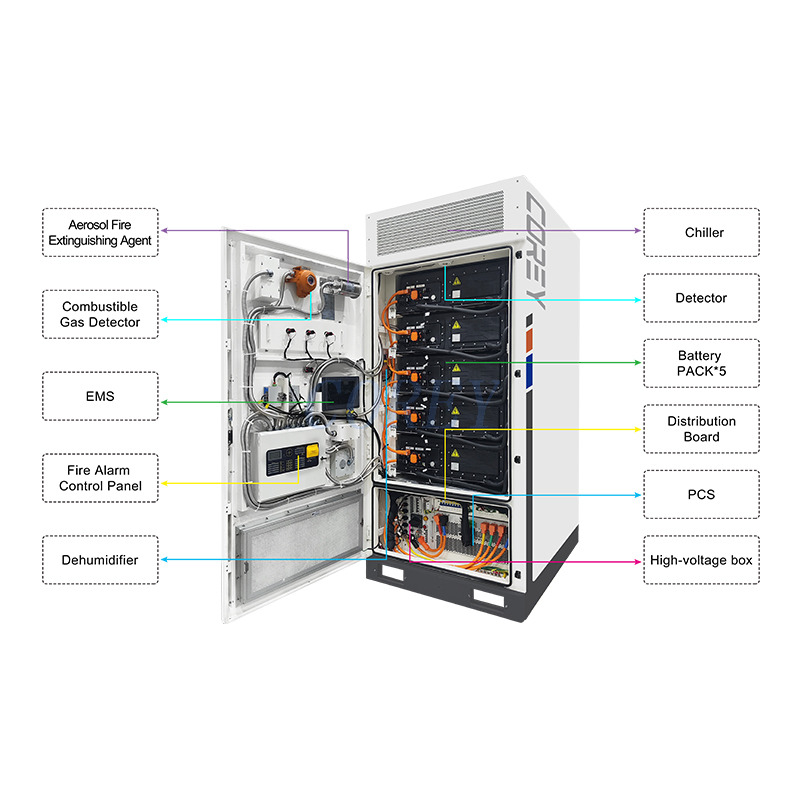
Understanding how BESS works helps you map technical features directly to commercial benefits. The system operates through continuous, intelligent cycles rather than static energy holding.
The foundational mechanic relies on timing. Energy storage systems capture surplus energy when it is abundant and cheap. They pull this power from the utility grid during off-peak night hours. Alternatively, they capture excess midday generation from on-site solar arrays. The system holds this energy safely until your facility demands it most.
The physical charge cycle means nothing without intelligent execution. The EMS software uses predictive analytics and real-time load monitoring. It watches your facility's consumption patterns constantly. When grid power becomes too expensive or unstable, the software deploys the stored energy. This precision ensures you only use battery power when it yields the highest financial return.
You might wonder how this fits into your current electrical infrastructure. Properly designed systems integrate seamlessly. They require specific switchgear and transfer switches. When a grid outage occurs, the transition takes milliseconds. Your facility operations continue without disruption, and your critical equipment never notices the switch.
Choosing the right hardware is only half the battle. High-ROI outcomes depend on targeting specific BESS applications. Let us explore the primary operational use cases and their respective success metrics.
Commercial utility bills often include steep demand charges based on your highest 15-minute usage window. Peak shaving uses stored energy during these exact utility peak windows. By discharging the battery, you artificially lower your grid draw. This strategy effectively slashes high-cost demand charges.
Solar panels generate the most power at midday, but peak facility demand often occurs later. Time shifting solves this mismatch. You store midday solar overproduction and use it during evening peak hours. This maximizes the value of your renewable assets.
Grid instability poses a severe threat to manufacturing and data centers. The battery acts as a bridge or primary power source during unexpected grid outages. It keeps your operations running until backup generators spin up, or it sustains critical loads indefinitely in smaller microgrids.
Some utilities pay commercial energy users to help stabilize the broader grid. You can generate revenue by participating in demand response programs. The utility signals your battery to discharge when grid frequency drops, creating a valuable new income stream.
Application Success Metrics Summary
Application Focus | Primary Business Goal | Key Success Metric |
|---|---|---|
Peak Shaving | Reduce utility demand charges | ROI payback period based on historical utility bills |
Solar Integration | Maximize renewable efficiency | Percentage of renewable self-consumption vs. export |
Microgrid Resilience | Ensure operational continuity | Avoided cost of downtime and critical load continuity |
Grid Services | Generate ancillary revenue | Additional annual revenue streams offsetting system OPEX |
Deciding to adopt advanced battery storage technology requires objective risk assessment. You need a balanced view of both the advantages and the friction points.
The benefits extend far beyond basic backup power. You secure predictable energy costs in a volatile utility market. You also gain enhanced energy security. Compared to traditional diesel generators, batteries offer superior footprint efficiency. They operate silently and boast zero-emission operation, supporting your corporate ESG mandates.
No technology is without its hurdles. You must prepare for these realities:
Upfront CAPEX: Commercial systems require a significant initial capital expenditure. Careful financial modeling is necessary to justify the investment.
Capacity Fade: Natural battery degradation occurs over time. Just like a smartphone, a commercial cell loses a small percentage of its maximum capacity after thousands of cycles.
Environmental Demands: Batteries require strict thermal management. You must account for HVAC power consumption and mandatory fire suppression systems in your facility planning.
Beyond the hardware, you will face hidden friction points during deployment. Supply chain lead times for transformers and switchgear often delay projects. Navigating complex local permitting processes requires patience and expertise. Utility interconnection delays remain the most common bottleneck. You must align your internal timelines with these external realities.
Your relationship with your vendor will last for decades. Selecting a BESS supplier demands rigorous evaluation. Look past the initial sales pitch and focus on long-term viability.
Safety & Compliance: Never compromise on safety. Demand proof of tier-1 cell manufacturing. Require comprehensive system-level certifications. Ensure the product meets strict UL 9540 and NFPA 855 compliance standards.
Software Superiority: The hardware is useless without excellent software. Assess the EMS dashboard during a live demo. Ask the supplier to prove their algorithms can optimize battery degradation while maximizing your financial return.
Bankability & Warranty Nuance: Analyze the warranty fine print carefully. Avoid generic 10-year guarantees. Look for performance guarantees tied to specific usage profiles, such as defined cycles per year and expected capacity retention.
Turnkey vs. Component Approaches: Determine the vendor's integration capabilities. Do they offer end-to-end integration (EPC capabilities) or just drop hardware at your loading dock? Turnkey solutions generally reduce finger-pointing among contractors during the final commissioning phase.
Mastering basic storage concepts is the critical first step toward securing energy independence. By understanding the core components, operational logic, and deployment risks, you can actively mitigate rising operational costs. You no longer have to rely solely on an unpredictable utility grid.
Take proactive steps today. Initiate a detailed load profile analysis for your facility. Do not settle for generic budgetary quotes. Request custom feasibility models from shortlisted vendors. Ensure these models clearly outline CAPEX, OPEX, and realistic ROI projections based on your specific operational data. Rigorous preparation guarantees a successful, resilient energy transition.
A: Most commercial systems are engineered for a 10 to 15-year operational lifespan before requiring significant capacity augmentation. Lifespan depends heavily on cycle life (how often you charge/discharge) and calendar life (natural chemical aging). Proper thermal management and optimized EMS dispatch algorithms help maximize battery longevity.
A: A traditional UPS provides passive, short-duration backup to bridge power gaps until generators start. A commercial storage system offers active energy management. It features deeper discharge capabilities and much longer durations. It manages peak shaving and utility cost reduction daily, rather than just waiting for an emergency.
A: Yes, but they require advanced microgrid controllers and paired generation sources like solar or diesel. Off-grid operation is not a simple plug-and-play scenario. The system needs specialized hardware to form the grid frequency and manage continuous energy balance without utility support.
A: Buyers typically choose direct CAPEX purchases for maximum long-term return. However, leasing options are increasingly popular to minimize upfront costs. Many companies also explore Energy-as-a-Service (EaaS) or Power Purchase Agreements (PPA), where a third party owns and maintains the asset while you share the savings.


