
Views: 0 Author: Site Editor Publish Time: 2026-09-13 Origin: Site


The era of relying solely on a traditional utility grid is rapidly ending. Facilities today face a massive shift toward decentralized power management. Rising peak demand charges, severe grid instability, and aggressive decarbonization mandates drive this crucial change. You might know an energy storage setup is a proven technology. However, poorly matched system sizing, overlooked safety compliance, or selecting the wrong battery chemistry can easily ruin your financial returns. A misstep here transforms a valuable asset into an operational liability. Procurement teams and facility leaders must navigate these complex choices carefully. We created this vendor-neutral, evidence-based guide to help you. We will equip you with a clear framework to evaluate technologies effectively. You will learn how to assess deployment risks properly and select a qualified architecture. By the end, you will know exactly how to align hardware capabilities with your strategic business goals.
Modern businesses must treat energy as a variable they can control. Evaluating the benefits of energy storage requires looking beyond basic backup power. You must consider daily operational savings and grid monetization strategies.
Utility bills for large facilities usually include demand charges. These charges penalize you for your highest spikes in power usage. A single 15-minute usage spike can account for half your monthly electricity bill. Batteries solve this problem perfectly. They monitor your facility load in real time. When your power demand spikes, the system discharges stored energy immediately. This action flattens your facility’s load profile. The utility grid never sees your peak usage. Therefore, you directly reduce utility demand penalties.
Traditional diesel generators are noisy, polluting, and slow to start. Modern facilities are moving beyond them. Integrating battery systems enables true microgrid functionality. Assessing the financial value of zero-interruption switchovers during grid outages is critical. A momentary power blink can shut down sensitive manufacturing lines. It can also corrupt vital data center operations. Batteries provide seamless transition power. They keep operations running until the grid stabilizes or backup generators spin up.
Onsite solar or wind generation loses value if you cannot control the output. Often, solar panels generate maximum power when facility demand is low. The utility might curtail this excess power. Sometimes, they pay pennies for it. Implementing renewable energy storage changes the return on investment calculation completely. You capture curtailed solar power during the day. You then deploy that same power during expensive evening tariff periods. This strategy maximizes the financial yield of your existing onsite generation assets.
Your batteries do not have to sit idle. You can monetize the system by participating in utility grid service programs. Virtual Power Plants (VPPs) aggregate many battery systems together. Utilities pay facility owners to discharge power during grid-wide emergencies. You can also earn revenue through frequency regulation or demand response programs. This transitions your site from a cost center into a revenue-generating asset.
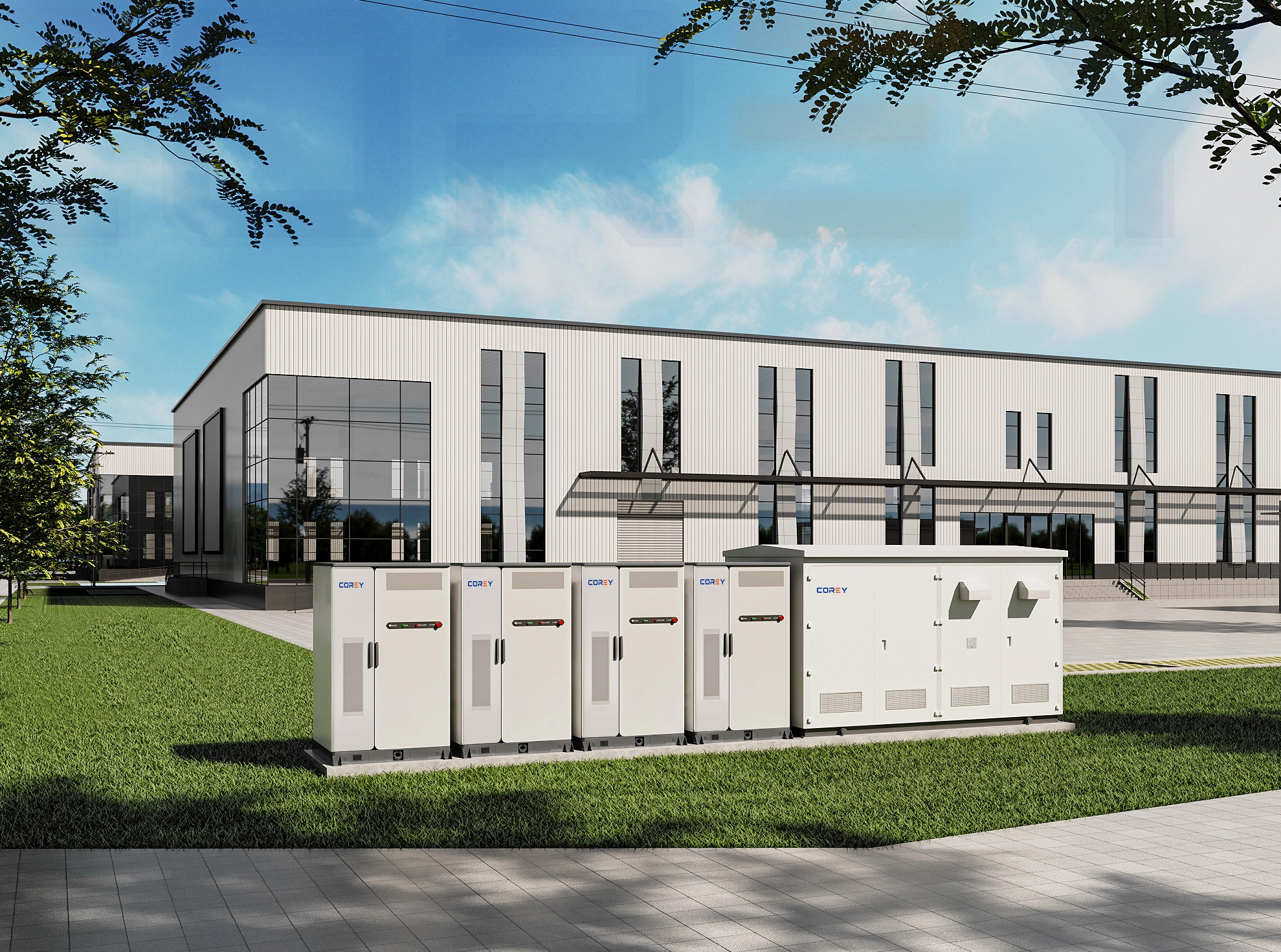
Selecting the right hardware architecture is foundational to your success. You must evaluate chemistries through an evidence-based lens. Different use cases require entirely different battery types.
The battery industry currently debates two dominant lithium chemistries. They are Nickel Manganese Cobalt (NMC) and Lithium Iron Phosphate (LFP).
Table: Battery Chemistry Comparison
| Feature | NMC (Lithium-Ion) | LFP (Lithium Iron Phosphate) |
|---|---|---|
| Energy Density | High (Compact footprint) | Moderate (Larger footprint) |
| Cycle Life | Average (Shorter lifespan) | Excellent (Longer lifespan) |
| Thermal Stability | Lower (Higher fire risk) | High (Inherently safe) |
| Primary Use Case | Electric vehicles, space-constrained sites | Stationary commercial storage |
Flow batteries represent an entirely different approach. They pump liquid electrolytes through a central stack. They are best for long-duration applications lasting eight hours or more. Evaluation note: Flow batteries require higher upfront capital expenditure. They also demand a massive physical footprint. However, they suffer near-zero degradation over a 20-year lifespan. This makes them compelling for specific heavy-industry usage.
You must decide how to connect your batteries to your facility and solar arrays. You have two main choices.
Hardware capabilities must align with specific operational environments. The exact energy storage applications you choose will dictate your engineering approach.
Retail stores, manufacturing plants, and data centers rely heavily on commercial energy storage. Success criteria here revolve around strict financial returns. Facilities achieve this via aggressive demand charge reduction. ESG (Environmental, Social, and Governance) compliance also drives adoption. Corporations use batteries to prove they are utilizing green energy effectively. A data center, for example, prioritizes uptime and peak shaving simultaneously.
Massive deployments look very different from facility-level batteries. Grid energy storage involves large-scale capacity ranging from Megawatt-hours (MWh) to Gigawatt-hours (GWh). Grid operators use these massive sites for grid stabilization. They balance grid frequency in milliseconds. Furthermore, utilities deploy them to defer expensive transmission line upgrades. Placing a large battery near a congested node saves millions in infrastructure costs.
The residential sector is rapidly moving beyond basic power backup. Homeowners now integrate batteries with home EV charging. They utilize smart load management systems for total energy independence. The goal is to disconnect from fluctuating utility pricing entirely. Modern residential units intelligently route solar power to the house, the EV, or the battery based on daily routines.
Deploying an energy storage system requires serious engineering oversight. Hardware alone guarantees nothing. You must navigate a minefield of regulations, software integrations, and physical site preparations.
You cannot compromise on fire safety. You must verify the absolute necessity of specific certifications. Ensure your cells carry UL 1973 certification. Ensure your full system carries UL 9540 certification. Furthermore, navigating AHJ (Authority Having Jurisdiction) approvals takes time. Local fire marshals scrutinize battery projects heavily. You must prove compliance with local fire codes. Failure to do so will halt your project indefinitely.
Many buyers ignore the hidden costs of physical implementation. Battery systems are highly sensitive to temperature extremes. They require strict HVAC controls to prevent overheating. You must maintain these temperatures to keep your warranties valid. Additionally, you must allocate specific clearance perimeters around the units. These spacing rules allow for safe maintenance access and fire mitigation.
Hardware is completely useless without intelligent software. The Battery Management System (BMS) is the brain of your setup. You must evaluate the software’s ability to monitor individual cell health accurately. It must balance electrical loads seamlessly across battery racks. Crucially, your BMS must interface seamlessly with your existing SCADA or building management systems. If the software fails to communicate properly, you lose all financial benefits.
Lithium batteries degrade over time. It is a simple chemical reality. You must factor natural capacity fade into your long-term financial models. Typically, lithium batteries lose 2% to 3% of their capacity annually. Savvy project managers plan for "augmentation." This means they leave physical space to add more battery modules in year five or seven. This strategy maintains the system's baseline capacity throughout its contracted lifespan.
Selecting the right vendor is just as important as selecting the right chemistry. You are entering a decade-long relationship. You must carefully vet any battery storage supplier before signing a contract.
A warranty is only a piece of paper if the company disappears. You must assess the financial health of the manufacturer. A 15-year performance warranty is entirely void if the supplier goes bankrupt in year three. Ask for financial statements. Look for established companies with diverse revenue streams. Bankability proves they will survive to honor their long-term commitments.
You must decide your procurement strategy early. You can hire integrators who handle full EPC duties. EPC stands for Engineering, Procurement, and Construction. They handle the hardware, software, and physical installation. Alternatively, you can buy standalone hardware components. Buying components is cheaper upfront. However, it forces your team to manage the complex integration and software bridging. Most commercial facilities prefer turnkey solutions.
Hardware delays rarely kill projects. Utility grid interconnections do. Ask your supplier about their experience dealing with local utility interconnection applications. This metric is critical. A supplier who misunderstands the local utility's paperwork can cause 6-to-12 month project delays. You need a partner who knows exactly how to push approvals through the utility bureaucracy.
Do not issue a Request for Proposal (RFP) blindly. Follow a systematic approach to define your needs first.
Successful energy storage deployment requires deep financial and engineering calculations. It is never just a simple hardware purchase. You must view it as an active grid asset. Remember that alignment between your chosen system chemistry, your software capability, and your specific application determines your ultimate ROI. Cutting corners on fire certifications or BMS software will quickly negate your hardware savings. Treat vendor vetting as a critical risk mitigation step.
Now is the time to optimize your facility's energy strategy. Take the first step toward energy resilience today. We prompt you to schedule a technical load profile assessment immediately. Alternatively, download a detailed procurement checklist to organize your vendor evaluations. Proactive planning today ensures predictable operational savings tomorrow.
A: A commercial lithium system typically lasts 10 to 15 years. You must distinguish between cycle life and calendar life. Heavy daily cycling degrades cells faster. Most facility operators plan augmentation strategies. They add fresh battery modules around year seven to maintain total system capacity across a 15-year horizon.
A: Expect a realistic ROI between 4 to 7 years for commercial installations. This timeline depends heavily on your local utility rates. High peak demand charges accelerate payback. Furthermore, capturing tax incentives like the ITC (Investment Tax Credit) significantly shortens your break-even period.
A: It is possible, but rarely economical for large facilities. There is a massive difference between grid-tied resilience and true off-grid sizing. Grid-tied systems handle peak shaving and short outages affordably. Taking a facility entirely off-grid requires massively over-sizing the battery and solar capacity. This causes a massive cost leap.
A: Yes, modern systems are safe when properly certified and installed. Reputable manufacturers use inherently safer LFP chemistry to minimize thermal risks. Strict enforcement of UL 1973 and UL 9540 standards ensures rigorous safety testing. Proper HVAC controls and adherence to local fire spacing codes further eliminate operational hazards.


