
Views: 0 Author: Site Editor Publish Time: 2026-06-10 Origin: Site


Modern energy reliance faces severe inefficiencies every single day. Without physical storage, homeowners waste up to 70% of their generated solar power. They send clean energy back to the grid for pennies. Meanwhile, utility companies continuously hike peak electricity rates. Extreme weather events frequently expose our fragile grid infrastructure, leaving families in the dark. You need a smarter, more resilient solution. Enter the household energy storage integrated system.
This technology functions as an automated energy management hub for your home, not merely as a dumb backup battery. It actively decides when to store, consume, or sell electricity. Say goodbye to unpredictable power bills and vulnerable household appliances. This guide deliberately bypasses entry-level definitions. Instead, we will unpack the exact system mechanics, real-world hardware costs, and hidden implementation risks. You will also learn strict evaluation criteria to help you make a highly confident purchase decision. Let us dive into the core architecture driving this energy revolution.
An integrated system combines the battery, inverter (PCS), and energy management software (EMS) into a single, unified unit, eliminating compatibility issues and reducing physical footprint.
The primary ROI drivers are dynamic load shifting, time-of-use (TOU) arbitrage, and participation in Virtual Power Plants (VPPs)—not just emergency backup.
When evaluating a residential battery storage system, buyers must prioritize Lithium Iron Phosphate (LFP) chemistry, at least a 6,000-cycle lifespan, and a 10-year warranty retaining 70% capacity.
Installation involves hidden "soft costs" (permits, panel upgrades) that must be factored into the initial $500–$1,000 per kWh baseline hardware cost.
To understand the integrated approach, we must first look at the problem plaguing legacy setups. Traditional setups rely heavily on pieced-together components. You might buy a battery from Brand A and an inverter from Brand B. You then monitor everything using a third-party application from Brand C. These separate components rarely speak the same digital language. Communication errors happen frequently. Firmware updates often break system compatibility. Furthermore, if a component fails, vendors quickly blame each other. Warranties become incredibly difficult to enforce. These fragmented systems also require massive amounts of garage wall space and messy wiring.
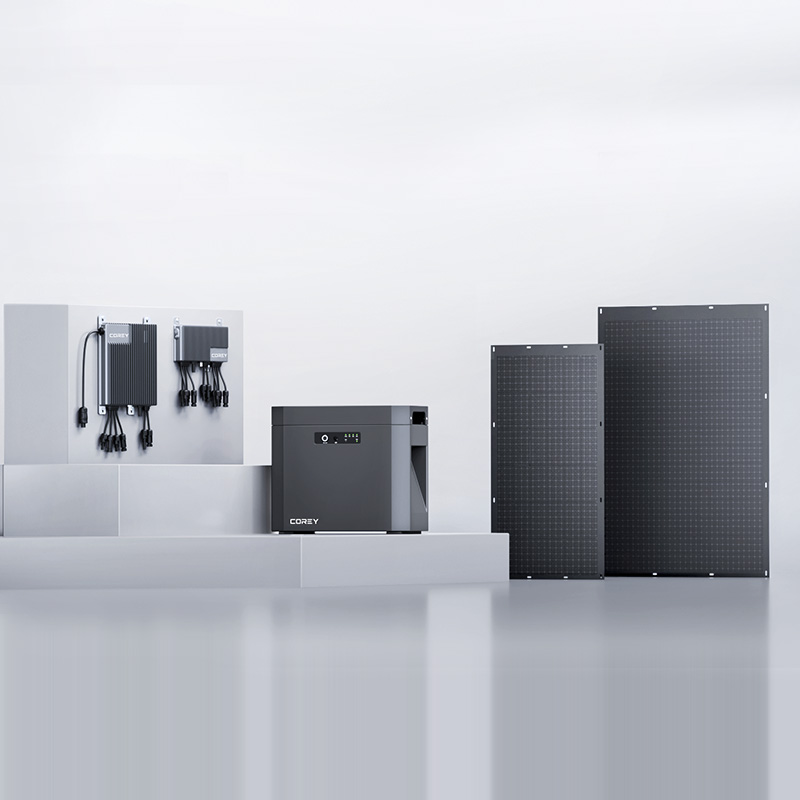
An integrated home energy storage system solves these headaches. It packages the critical hardware and software into one sleek, cohesive unit. This unified architecture relies on three foundational pillars:
Battery Management System (BMS): Think of the BMS as the ultimate safety governor. It constantly monitors individual battery cells. It regulates internal voltage and cell temperature. This prevents catastrophic issues like overcharging or thermal runaway. It keeps your home safe.
Power Conversion System (PCS / Hybrid Inverter): The PCS acts as the master translator. Solar panels produce Direct Current (DC). However, your household appliances require Alternating Current (AC). The PCS seamlessly converts DC to AC. It also steps voltage up or down to ensure safe distribution throughout your electrical panel.
Energy Management System (EMS): The EMS serves as the algorithmic brain. It uses real-time data to make split-second financial decisions. It tracks weather forecasts, utility rate schedules, and your family's consumption habits. The EMS automatically dictates whether electricity gets stored, instantly consumed, or sold back to the utility company.
Understanding the hardware is only half the battle. You must understand how these systems operate in real time. An integrated system runs a continuous, automated daily cycle. It maximizes your financial savings without requiring any manual input from you.
As the sun rises, your solar panels begin generating raw DC power. The integrated PCS immediately routes the required AC power directly to your home. It powers your morning appliances like coffee makers and lights. Once your home reaches its energy baseline, the system shifts gears. It instantly diverts all surplus solar energy to charge the battery unit. It actively prevents bleeding valuable electricity back to the grid for low credit.
Utility companies typically spike their rates between 4:00 PM and 9:00 PM. The EMS knows this schedule perfectly. As utility rates hit their peak, the EMS automatically halts all grid consumption. It switches your house over to the stored battery power. Your high-draw appliances, like HVAC units and washing machines, now run entirely on your personal energy savings account. You successfully bypass the most expensive electricity of the day.
Power outages reveal the true magic of modern storage. Standard grid-tie solar systems face a strict compliance reality. Regulations legally require them to shut down completely during blackouts. They must stop producing power to protect utility repair workers from rogue electricity flowing back into damaged lines. However, an integrated system offers a brilliant bypass. It uses an anti-islanding switch. This switch physically isolates your home from the utility grid in milliseconds. The system then transitions to battery power seamlessly. It keeps your prioritized critical loads running while your neighbors sit in darkness.
You can leverage an integrated system even if you lack solar panels. The EMS can buy electricity from the grid during cheap off-peak hours (like 2:00 AM). It stores this cheap power and discharges it during the expensive evening peak. This practice is called grid arbitrage. Furthermore, many systems now connect to Virtual Power Plant (VPP) networks. During extreme high-demand events, utility companies will pay you a premium to discharge your battery back into the grid. You become a micro-power plant.
Summary Chart: The Daily Energy Cycle | ||
Time of Day | System Action | Primary Benefit |
|---|---|---|
Morning to Midday | Captures surplus solar and charges the battery. | Prevents wasted energy and maximizes self-consumption. |
Late Afternoon to Evening | Discharges battery to power the home. | Avoids expensive peak utility rates (Load Shifting). |
Nighttime (Off-Peak) | Charges from the grid if rates are low (optional). | Sets up the battery for tomorrow's arbitrage. |
Unexpected Outages | Isolates home from grid; supplies backup power. | Ensures resilience and safety for critical appliances. |
Many homeowners love the concept of energy independence. However, the financial realities often cause confusion. You must look past the sleek marketing brochures. You need a transparent view of the capital required to get a system operational.
The industry currently operates on a fairly standard pricing benchmark. You should expect baseline hardware to cost between $500 and $1,000 per kilowatt-hour (kWh) of storage capacity. The average American home typically installs a 10 kWh setup to handle daily load shifting. Therefore, the physical hardware will run anywhere from $5,000 to $10,000. This price strictly covers the battery, the inverter, and the management brain.
Salespeople frequently omit secondary expenses during their initial pitches. We call these "soft costs." You must budget an additional $2,000 to $4,500 beyond the hardware. These funds cover several mandatory steps.
Specialized Labor: Electricians who handle high-voltage battery systems charge premium rates.
Municipal Permits: City governments require specific fire code permits and inspection fees.
Main Electrical Panel Upgrades: Older homes often feature outdated 100-amp panels. You will likely need a 200-amp upgrade to safely integrate the new inverter.
Fortunately, robust government subsidies dramatically compress your payback period. In the United States, the federal Investment Tax Credit (ITC) allows you to claim 30% of the total system cost. Crucially, this 30% applies to both the hardware and the installation labor. Local municipalities and state governments often stack additional rebates on top of the federal credit. Always consult a tax professional to maximize these returns.
The market is flooded with competing brands. Choosing the right residential battery storage setup requires strict evaluation. You must interrogate the spec sheets. Do not settle for vague marketing promises. Focus entirely on chemistry, capacity, scalability, and long-term guarantees.
Never buy outdated lead-acid batteries. They degrade quickly and consume too much space. Furthermore, avoid standard Lithium-Ion (NMC) chemistries commonly found in electric vehicles. They pose higher risks of thermal runaway. Instead, advocate exclusively for Lithium Iron Phosphate (LFP) chemistry. LFP offers superior thermal stability. It simply does not catch fire under stress. LFP also boasts a massive lifecycle. You should target a system rated for at least 6,000 complete charge cycles. This equates to over 15 years of daily use.
Many buyers confuse capacity and output. This mistake leads to major disappointment during a blackout. Capacity, measured in kilowatt-hours (kWh), dictates exactly how long your battery lasts. It acts like the size of a gas tank. Output, measured in kilowatts (kW), dictates what appliances can run simultaneously. It acts like the horsepower of an engine. You need high continuous output to handle the massive surge currents demanded by well pumps or air conditioning compressors.
Understanding the Difference: kWh vs. kW | |||
Metric | Definition | Real-World Analogy | Why It Matters |
|---|---|---|---|
Capacity (kWh) | Total energy stored in the unit. | The size of a car's fuel tank. | Determines if you can survive a multi-day grid outage. |
Output (kW) | Maximum power delivered at one moment. | The horsepower of the car's engine. | Determines if you can start a heavy AC compressor without tripping the system. |
Your energy demands will inevitably grow. You might purchase an electric vehicle next year. You might add an electric heat pump to your home. Evaluate whether the system allows for modular scalability. The best integrated systems let you "stack" additional battery blocks in the future. They let you expand from 10 kWh to 20 kWh without forcing you to replace the primary inverter.
Sales reps love touting a "10-year warranty." Look past this headline. A battery naturally loses capacity over time. You must verify the end-of-life capacity retention clause. The current industry standard guarantees the battery will retain at least 70% of its original capacity at year 10. If a brand only guarantees 50% or 60%, walk away immediately.
Even the best hardware will fail if installed incorrectly. Integrated systems carry specific physical requirements. You must plan your installation location carefully to avoid voiding your warranty or violating local fire codes.
Lithium batteries hate extreme temperatures. You cannot place these units in direct, blazing sunlight. You also cannot install them in tightly sealed, unventilated closets. They require adequate airflow to dissipate heat from the inverter. If you live in a region with extreme freezing temperatures, outdoor installation poses a major risk. Cold severely limits a battery's ability to charge. In cold climates, ensure your chosen system features built-in internal heating elements. Otherwise, install the unit inside a temperature-controlled garage.
You must acknowledge the primary tradeoff of an integrated system. Buying an all-in-one unit guarantees seamless compatibility today. However, it ties you directly to a single manufacturer's ecosystem for the future. If you want to expand your capacity in five years, you must buy modules from that specific brand. You cannot mix and match hardware. Make sure you choose a tier-one manufacturer with a strong financial balance sheet. You want them to still be in business a decade from now.
Never attempt a DIY installation. Modern storage systems operate at high voltages. They pose lethal risks if mishandled. Emphasize strict certification requirements. Ensure the equipment carries the UL 9540 certification. This specific safety standard verifies the battery and inverter operate safely together. Specialized, licensed installation is absolutely mandatory. Without proper permitting and sign-offs, you risk catastrophic fire code violations. More importantly, an unpermitted installation will immediately invalidate your homeowner's insurance policy if an accident occurs.
A household energy storage integrated system fundamentally shifts your relationship with power. It transforms your home from a passive energy consumer into an active, resilient energy manager. You gain total control over when and how you use electricity. You shield your family from grid outages. You actively fight back against rising utility rates. The upfront investment requires serious consideration, but the long-term autonomy offers unmatched peace of mind.
Your next step requires data. Begin your purchasing journey by auditing your past six months of utility bills. Identify your specific peak usage hours and highest kilowatt demands. Next, seek out local, licensed installers. Verify they hold certifications directly from top-tier integrated system manufacturers. Schedule a thorough site assessment to determine your ideal installation location and capacity needs. Take action today to secure your energy future.
A: Yes. You can charge the system directly from the utility grid during off-peak hours when electricity is cheapest. You then discharge it during expensive peak hours. This time-of-use rate arbitrage saves you money daily. It also provides reliable emergency backup. However, your financial return on investment takes longer without free solar generation.
A: Most standard 10kWh systems are designed only for "critical loads." This covers essentials like refrigerators, lights, and internet routers. If you want true whole-home backup, you typically need to stack multiple modules to exceed 20kWh. You must also ensure the system offers heavy continuous kW output to handle HVAC surges.
A: No. A standard integrated system remains grid-tied. It uses the utility network as a backup safety net while offering islanding capabilities during temporary outages. True off-grid setups are entirely different. They require massively overbuilt battery storage and secondary diesel or propane generators to survive consecutive cloudy days.


