
Views: 0 Author: Site Editor Publish Time: 2026-09-17 Origin: Site


Correct commercial battery energy storage system sizing is the difference between a highly profitable energy asset and a stranded capital expense. Oversizing destroys your return on investment. Undersizing leaves facilities exposed to punishing peak demand charges and grid outages. Decision-makers face a complex balancing act. They must analyze intricate utility tariff structures. They need to understand their specific facility load profiles. Furthermore, they must account for harsh chemical degradation realities. Taking these steps allows them to engineer a financially viable solution.
This guide provides a verifiable, data-backed framework. We will show you how to calculate exact system requirements. You will learn to size systems for both demand charge management and critical backup. We remove the guesswork from energy storage planning. Instead, we rely on precise mathematical formulas and real-world performance metrics. By the end of this article, you will confidently align hardware capabilities with your facility's unique energy demands.
A successful commercial BESS design starts by untangling power from energy. The technical relationship between kW and kWh directly drives your project costs. You must understand these primary sizing metrics to build an effective system.
Engineers often use a plumbing analogy to explain battery metrics. We can view power as the pipe size and energy capacity as the tank size. Both dictate system performance differently.
The ratio of kW to kWh is known as the C-rate. This ratio heavily impacts your battery chemistry choice. It also dictates thermal management requirements and overall project cost. A 1C battery can discharge its entire capacity in one hour. A 0.5C battery takes two hours to discharge fully. High C-rate systems require robust cooling mechanisms. They also use specialized lithium-ion cell structures. This drives up initial hardware costs.
You must balance these metrics to protect your investment. Paying for unnecessary kWh capacity drastically reduces your internal rate of return (IRR). Excess batteries simply sit idle. Conversely, inadequate kW limits your peak shaving potential. If the inverter cannot deploy power fast enough, the utility meter registers the demand spike. This results in costly peak demand charges.
You cannot size a system using a monthly electric bill. Monthly bills only show total consumption. They hide the critical power spikes that drive demand charges. You need granular data.
You must acquire raw operational data to start your analysis. Follow these specific steps to gather the right information:
Utilities charge commercial customers using complex rate structures. You must evaluate specific utility rate structures to model financial returns.
Next, identify the target demand threshold. This represents the specific kW cap the facility aims to stay under. Keeping loads below this threshold maximizes your financial returns. Any usage above this line will be handled by the battery.
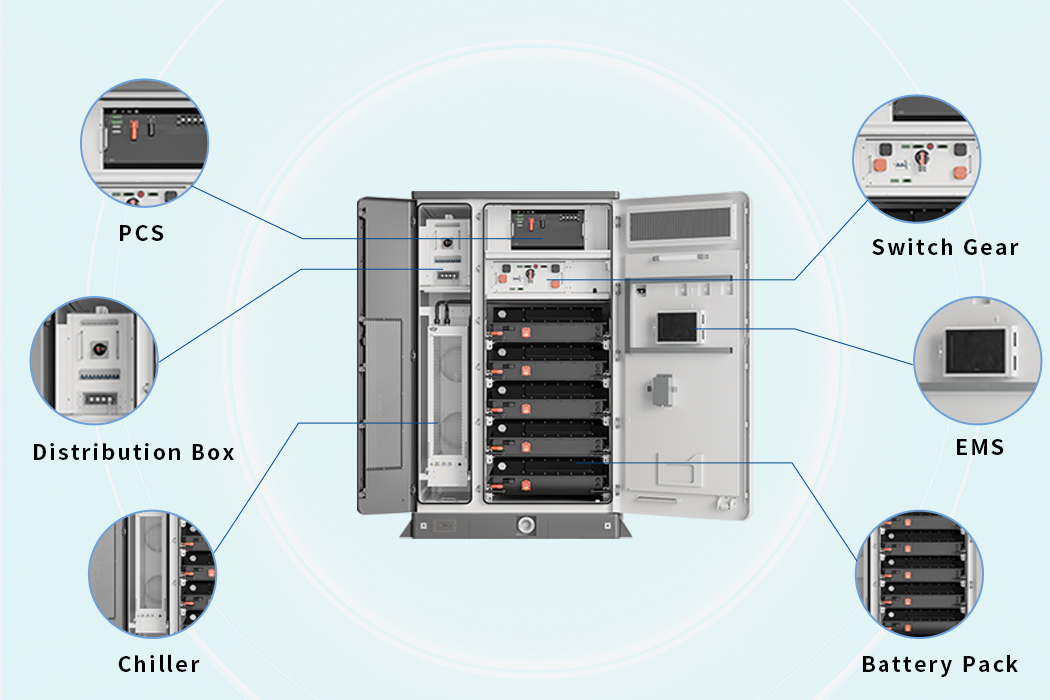
Executing an accurate BESS sizing calculation requires basic calculus. You are matching battery discharge capabilities against your facility's historical load curves.
We break the calculation into two distinct mathematical steps. First, we size the inverter (power). Second, we size the battery banks (energy).
Target kW Sizing: You use a simple subtraction formula. Take your maximum historical peak demand (kW). Subtract your desired target demand threshold (kW). The result equals your required Inverter kW. For example, if your peak is 800 kW and your target threshold is 500 kW, you need a 300 kW inverter.
Target kWh Sizing: This requires calculating the area under the load curve. You look at the specific time periods where your facility's load exceeds the target threshold. You calculate the integral of power over time for those spikes. This gives you the raw energy required to shave the peak.
You must determine the required battery storage duration based on your peak characteristics. Do your peaks last 15 minutes, or do they drag on for three hours? A sharp, brief spike might only need a 1-hour duration system. A sustained afternoon air conditioning load might require a 4-hour system.
Energy Management System (EMS) software capabilities heavily influence hardware sizing. Predictive EMS software uses machine learning to forecast peaks. It pre-cools buildings or curtails minor loads automatically. This allows you to size the hardware less aggressively. Without smart software, you must oversize the battery to avoid missing unexpected peak events.
| Sizing Variable | Basic Logic Controls | Predictive AI EMS |
|---|---|---|
| Battery Capacity (kWh) | Requires 20-30% oversizing to buffer unexpected loads. | Allows leaner sizing due to load forecasting. |
| Inverter Power (kW) | Fixed threshold triggers. | Dynamic response adjusts instantly to grid signals. |
| Financial Return (IRR) | Moderate. High Capex eats into savings. | High. Optimized hardware limits initial expenditure. |
Sizing for grid resilience requires a completely different engineering approach. You must ensure your backup power capacity meets strict operational demands during blackouts.
Peak shaving offsets partial facility load. However, backup power capacity must fully support designated critical circuits during an outage. You cannot run an entire manufacturing plant on batteries economically. Instead, you isolate critical loads.
You must identify vital equipment. This includes data servers, emergency lighting, and essential manufacturing lines. Sum their starting wattage and running wattage. This total dictates your absolute minimum power requirement.
Calculate required kWh based on internal risk assessments. Look at historical outage durations in your region. Consult regulatory requirements for life-safety systems. Some medical or data facilities mandate a specific minimum runtime.
Address inrush current requirements carefully. This represents the surge capacity needed for motor starts. Industrial motors can draw three to six times their normal running current upon startup. This surge may require drastically oversizing the inverter (kW) relative to the battery (kWh).
Many facilities adopt a hybrid resilience strategy. They pair the BESS with solar PV arrays or diesel generators. This forms a microgrid. When integrating solar, you can reduce the required battery size. The solar panels charge the batteries during daylight outages. This creates a sustainable loop, extending backup duration indefinitely under optimal weather conditions.
Spreadsheet math often assumes perfect hardware. Real-world engineering requires adjusting for chemical decay and physical losses. Do not ignore these margins.
Dispel the myth of 100% usable capacity. A 500 kWh battery will not deliver 500 kWh to your electrical panel.
Lithium-ion cells degrade over time. You must explain degradation curves to financial stakeholders. Let us look at a practical example. A facility needs 500 kWh of peak shaving battery storage in Year 10 to meet its demand thresholds. The chosen battery chemistry degrades at 2% annually. Therefore, the Year 1 system must be oversized accordingly. You might need to install 600 kWh today to guarantee 500 kWh in a decade.
Capacity sizing directly impacts spatial requirements. Larger batteries take up more real estate. Furthermore, larger systems trigger strict fire safety compliance rules. NFPA 855 and UL 9540 standards dictate equipment spacing. You must leave three feet of clearance between battery racks. This footprint requirement often limits the maximum capacity you can physically install on site.
Hardware sizing is only half the battle. You must select a vendor capable of delivering reliable equipment. The market features dozens of manufacturers, but quality varies wildly.
Look for vendors who offer transparent ROI models based on usable capacity, not just nameplate ratings. If a vendor builds their financial model on 100% discharge, their projections are fictional.
Assess the integration of their proprietary EMS algorithms with the hardware. Software response times dictate peak shaving efficacy. The software must read utility meters and trigger the inverter in milliseconds. Review their warranty terms carefully. Look for cycle warranties rather than simple calendar years. Evaluate their capacity guarantees over the project lifespan.
Prepare a robust Request for Proposal (RFP). A strong RFP forces vendors to provide accurate sizing quotes. Include the following items in your RFP packet:
Providing this exact data prevents vendors from submitting generalized, inaccurate proposals.
Sizing a commercial BESS is not a guesswork exercise based on facility square footage. It is a strict mathematical alignment of load curves, utility tariffs, and chemical degradation profiles. You must isolate interval data. You must balance inverter power against battery capacity. You must also account for round-trip efficiency and future degradation.
We advise engaging with an energy consultant or integrated vendor early in your process. Request a preliminary feasibility study. Run a simulated load profile analysis before committing capital. Proper planning transforms a complex battery installation into a highly predictable, revenue-generating asset.
A: Monthly bills show total energy consumption over 30 days. They do not show the 15-minute interval spikes that trigger utility demand charges. Peak shaving targets these exact, brief spikes. You need high-resolution interval data to accurately size the inverter and battery capacity required to flatten your load profile.
A: Yes. Oversizing allows the system to operate at a lower Depth of Discharge (DoD). Shallower cycles reduce strain on the battery chemistry. However, the marginal increase in lifespan rarely offsets the drastic drop in financial ROI caused by the much higher initial capital expenditure.
A: Yes, but it requires "stacking" rules in the EMS. A portion of the capacity (e.g., 20%) must be logically walled off. The software holds this reserve strictly for outages. Consequently, this reduces the active capacity available for your daily peak shaving operations.


