
Views: 0 Author: Site Editor Publish Time: 2026-09-10 Origin: Site


For enterprise and utility-scale energy projects, the financial viability of stationary infrastructure hinges directly on one critical metric: realistic operational lifespan. You cannot base multimillion-dollar deployment strategies on overly optimistic assumptions. Miscalculating battery longevity leads directly to inaccurate ROI models. It forces unexpected early replacement costs and creates stranded assets. We consistently see field deployment realities diverge sharply from theoretical lab data, causing major performance discrepancies. Understanding the fundamental difference between chronological age and usage-based wear is critical. You need this knowledge to evaluate vendors accurately. It helps you structure resilient warranties and secure competitive project financing. In the following sections, you will learn how core chemistry dictates operational limits. We will identify which real-world variables accelerate physical wear. Finally, we will uncover practical engineering strategies to maximize asset utility and ensure your procurement contracts provide genuine performance guarantees.
Evaluating the true longevity of energy storage systems requires separating time-based aging from usage-based wear. Both factors operate simultaneously. However, they impact the internal cell chemistry in fundamentally different ways.
We define calendar life as the natural chemical degradation of battery cells over time. This aging occurs regardless of actual usage. Even if a battery sits completely idle in a warehouse, its internal components slowly degrade. Parasitic side reactions gradually consume active lithium ions. Most commercial lithium-based systems establish a baseline calendar life of 10 to 15 years. Environmental factors heavily influence this chronological timeline.
Conversely, we define battery cycle life as the total number of complete charge and discharge cycles a unit can endure. A single cycle represents discharging a fully charged battery and then recharging it completely. Commercial systems typically handle 4,000 to 8,000 cycles before their capacity drops below a functional operational threshold.
These dual metrics carry massive business implications. Project economics must carefully align the operational use case with the primary limiting factor. Consider a system designed for daily solar load shifting. This aggressive schedule means the system might hit its maximum cycle count in just eight years. On the other hand, an emergency backup power system rarely cycles. Its lifespan will strictly depend on chronological aging. You must ensure the system does not cycle out completely before its calendar warranty expires. Balancing these two limits forms the foundation of maximizing BESS battery life.
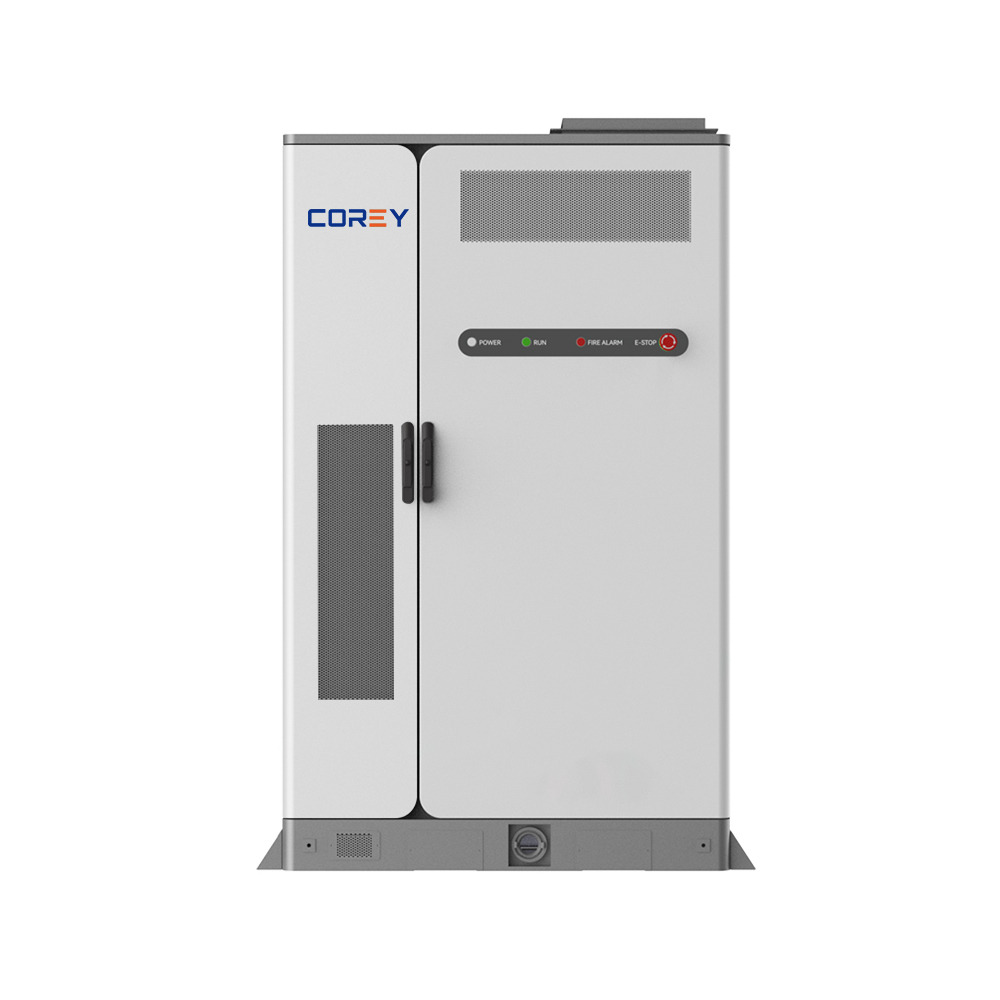
The core chemical composition inside a battery cell acts as the primary governor of its ultimate lifespan. Operators must select the right chemistry to match their dispatch profile. Two dominant technologies govern the current stationary storage landscape: Lithium Iron Phosphate (LFP) and Nickel Manganese Cobalt (NMC).
Lithium Iron Phosphate (LFP)
LFP batteries offer lower overall energy density compared to NMC. However, they deliver a significantly longer LFP battery lifespan, frequently exceeding 8,000 cycles under proper management. The internal crystalline structure of LFP proves incredibly robust. It resists breaking down during heavy, continuous usage. LFP also features superior thermal stability. It presents a much lower risk of thermal runaway. These robust safety margins make LFP the dominant choice for modern stationary grid infrastructure.
Nickel Manganese Cobalt (NMC)
NMC chemistries boast high energy density. They pack more power into a smaller physical footprint. This trait makes them highly popular in the electric vehicle (EV) sector. However, NMC cells degrade much faster under heavy, continuous cycling. Their cathode materials experience greater structural stress during deep discharges. This stress leads to faster capacity fade over time.
Evaluation Criteria for Buyers
You must shortlist technologies based strictly on the specific dispatch profile of your facility. Are you performing daily energy arbitrage or frequent grid frequency regulation? If so, LFP provides vastly superior long-term economic returns over a 15-year horizon. NMC might only make sense if you face extreme physical space constraints.
| Chemistry Type | Expected Cycle Life | Thermal Stability | Primary Advantage | Ideal Application |
|---|---|---|---|---|
| Lithium Iron Phosphate (LFP) | 6,000 - 8,000+ | Excellent (High threshold) | Long lifespan, high safety | Daily cycling, grid services |
| Nickel Manganese Cobalt (NMC) | 2,000 - 4,000 | Moderate (Requires cooling) | High energy density | Space-constrained backup |
Theoretical lifespan estimates mean little when deployed in harsh operating environments. Several real-world variables actively accelerate physical wear on the cells. Operators must tightly control these factors to prevent premature failure.
Depth of Discharge (DoD) Management
Pushing a system to a 100% depth of discharge severely accelerates micro-cracking within the cell cathode. Every time you drain a battery completely dry, you damage its internal architecture. Restricting your DoD limits to an 80%–90% window exponentially increases the overall cycle count. Shallow cycling preserves the delicate chemical balance inside the enclosure.
Thermal Stress and Operating Temperatures
Batteries are fundamentally chemically sensitive. They prefer the same comfortable temperatures humans do. Operating consistently above 25°C (77°F) rapidly accelerates parasitic reactions. Industry data shows an alarming trend: you effectively halve the baseline calendar life for every continuous 10°C increase above optimal temperatures. Cold extremes similarly slow down ion mobility, causing destructive lithium plating during recharge phases.
C-Rate (Charge and Discharge Speed)
The C-rate defines how quickly you push power in or pull power out. Rapid charging or aggressive discharging generates excessive internal heat. It places immense mechanical stress on the internal components. Slower, controlled energy transfers significantly reduce overall battery degradation.
The Skeptical Lens
We strongly advise viewing vendor projections through a highly skeptical lens. Disregard performance models assuming ideal lab temperatures and consistently shallow cycling. If your deployment requires aggressive grid-balancing operations in harsh summer climates, you must demand stress-tested field models.
Deploying a massive battery rack is only the first step. Maximizing its lifespan requires aggressive, continuous management. Proper energy storage maintenance relies heavily on automated software layers and strategic hardware planning. You must engineer resilience directly into your daily operations.
Following these specific engineering principles provides the surest pathway to operating a truly profitable, long-life BESS.
Marketing brochures promise decades of flawless operation. However, legal contracts govern your actual financial risk. You must thoroughly scrutinize vendor warranties before committing capital. A poorly structured warranty leaves you entirely exposed to early replacement burdens.
The operational lifespan of commercial storage assets is not a fixed number. It remains a highly dynamic variable heavily controlled by initial chemistry selection, rigid operational discipline, and intelligent procurement strategies. The industry recognizes 10 to 15 years as a standard baseline. However, achieving genuine long-term profitability requires aligning your cycle life expectations with rigorous engineering practices.
To move forward successfully, implement these immediate next steps:
A: EOL for commercial storage is generally defined as the point when the system degrades to 60%–70% of its original installed capacity, not when it stops working entirely. At this stage, the system often becomes economically inefficient for demanding applications, though it may be repurposed for secondary, low-stress applications.
A: Yes, you can significantly extend operational lifespan through strict maintenance protocols. This includes optimizing ambient liquid cooling, tightly limiting the depth of discharge, avoiding extreme fast-charging, and employing proactive capacity augmentation by adding new cell strings to existing infrastructure over time.
A: LFP chemistries degrade much slower over thousands of cycles. They handle continuous 100% state-of-charge periods significantly better than NMC. Furthermore, LFP cells pose a drastically lower risk of thermal runaway, making them the superior, safer financial choice for stationary long-duration storage deployments.


