
Views: 0 Author: Site Editor Publish Time: 2026-08-09 Origin: Site


Commercial and industrial facilities face unprecedented volatility in utility rates today. Demand charges now account for up to 50% of monthly electricity bills in certain markets. Traditional energy reduction methods often fail to address these momentary spikes in power usage. You simply cannot turn off essential machinery during operating hours to save power. Instead, deploying a commercial energy storage system transforms uncontrollable demand charges into a predictable, manageable operating expense. This guide breaks down the financial mechanics, hardware evaluation criteria, and implementation realities of using battery energy storage for peak shaving. You will discover practical strategies to stabilize overhead costs, evaluate heavy-duty equipment safely, and gain long-term energy independence.
Targeted Savings: Peak shaving explicitly targets utility demand charges by discharging stored energy during your facility’s highest 15-to-30-minute usage windows.
Hardware Matters: An integrated C&I BESS Cabinet (Commercial & Industrial Battery Energy Storage System) combines lithium-ion cells, inverters, and intelligent software to automate this process without disrupting operations.
ROI Dependency: Financial returns rely heavily on your local utility’s specific tariff structure; facilities in areas with high peak demand rates typically see payback periods of 3 to 7 years.
Risk Mitigation: Successful deployment requires evaluating hardware for thermal safety compliance, scalable architecture, and predictive energy management algorithms.
Many facility managers misunderstand how utilities calculate monthly commercial bills. We must first differentiate between energy charges and demand charges. Energy charges reflect the total volume of electricity consumed over the entire month. Utilities measure this volume in kilowatt-hours (kWh). Think of energy charges like the odometer in your vehicle, tracking total distance traveled. Demand charges operate entirely differently. They measure the highest peak rate of consumption over a very short billing interval. Utilities measure this peak intensity in kilowatts (kW). Think of demand charges like your vehicle's speedometer, capturing your highest maximum speed.
This structure creates a severe operational problem. A single 15-minute equipment start-up spike can dictate the demand charge for your entire month. You might operate efficiently and maintain low power usage for 29 days. However, one brief power surge on day 30 ruins your monthly utility bill. Heavy machinery, HVAC compressors, and industrial motors frequently cause these expensive billing events.
A peak shaving battery storage system acts as a reliable, high-speed buffer between your facility and the public grid. It continuously monitors your facility's real-time load profile. Consider a realistic industrial scenario. Your factory shift starts precisely at 8:00 AM. Multiple heavy motors and compressors turn on simultaneously. The total facility load rapidly approaches a predetermined utility threshold.
The storage system detects this impending spike instantly. It discharges stored energy directly into your facility network. This rapid response effectively "shaves" the peak off from the utility grid's perspective. Your machinery gets the necessary power to start up safely. However, the grid only sees a flat, steady draw of power. You successfully avoid triggering the costly demand charge penalty entirely.
Chart: Peak Shaving Load Profile Action | |||
Time of Day | Actual Facility Load (kW) | Battery Action | Grid Demand Registered (kW) |
|---|---|---|---|
07:00 AM | 150 kW | Standby | 150 kW |
08:00 AM (Shift Start) | 450 kW (Spike) | Discharging 200 kW | 250 kW |
10:00 AM | 200 kW | Standby | 200 kW |
02:00 PM | 400 kW (Spike) | Discharging 150 kW | 250 kW |
Modern facilities require specialized, robust hardware to handle extreme industrial loads safely. We define the C&I BESS Cabinet as a highly advanced, self-contained ecosystem. It physically houses multiple critical components under one durable enclosure. The cabinet includes high-density battery modules, a Power Conversion System (PCS) or inverter, dedicated climate control, and automated fire suppression systems.
Space remains a premium constraint at most industrial sites. Early energy projects required massive outdoor footprints and separate, climate-controlled equipment rooms. Today, an integrated all-in-one cabinet footprint provides a distinct operational advantage. You can install these modular units right next to primary electrical panels. This compact design reduces complex wiring needs and minimizes disruption to your active logistics yard or parking areas.
Hardware alone cannot reduce your utility bills effectively. Physical batteries remain useless without intelligent, automated dispatch controls. An advanced Energy Management System (EMS) serves as the primary brain behind the operation. Modern EMS platforms use complex machine learning models to analyze historical facility load profiles. They evaluate local weather patterns, production schedules, and historical grid constraints simultaneously.
The software predicts daily peaks with exceptional accuracy. It automates the entire charge and discharge cycle flawlessly. Your facility engineering team never needs to intervene manually. The predictive algorithms react in milliseconds to rapidly changing power demands. This automation ensures maximum financial savings without risking unexpected power shortfalls.
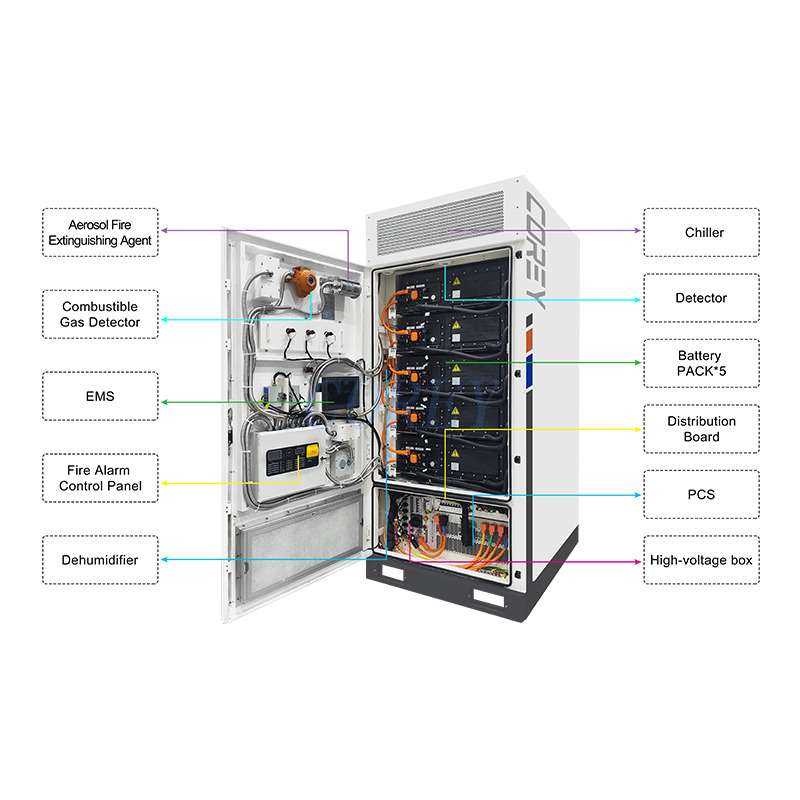
You must scrutinize the underlying cell chemistry when selecting a commercial system. The industrial storage sector heavily favors Lithium Iron Phosphate (LFP) over Nickel Manganese Cobalt (NMC). LFP chemistry provides distinctly superior thermal stability. It dramatically reduces overheating risks when discharging heavily during a peak event.
LFP also delivers a significantly longer overall cycle life. Daily peak shaving requires the battery to charge and discharge frequently. You need a chemical structure built strictly for long-term endurance. The operational longevity directly impacts your final return on investment.
Evaluation Metric | Lithium Iron Phosphate (LFP) | Nickel Manganese Cobalt (NMC) |
|---|---|---|
Thermal Stability | Excellent (High threshold for thermal runaway) | Moderate (Requires stricter monitoring) |
Cycle Life | 6,000 to 8,000 cycles | 2,000 to 4,000 cycles |
Safety Profile | Highly recommended for commercial setups | Better suited for EVs due to weight |
Cost per Cycle | Lower lifetime cost | Higher lifetime cost |
Fire risk remains a primary, valid concern for corporate executives and facility operators. You must address this skepticism directly through heavily certified hardware. Strict safety certifications guarantee reliable, predictable operation. Always look for UL 9540 certification when evaluating prospective equipment. This globally recognized standard ensures the battery, inverter, and software communicate safely.
Advanced commercial units now feature active liquid-cooling systems. Liquid cooling manages internal thermal output far better than basic air-cooling fans. Liquid systems maintain uniform cell temperatures across the entire battery rack. These overlapping safety layers are absolutely required for safe indoor and outdoor industrial deployment.
Industrial energy demands rarely remain static for long. Your facility will likely grow, adding new production lines or high-draw equipment. You must evaluate whether the chosen cabinet allows for seamless capacity expansion. A modular architecture lets you add more battery modules later as facility demands increase.
You easily slide new modules into existing cabinet racks. You avoid replacing the entire infrastructure when production scales up. This modularity ensures your initial capital investment remains fully protected over the next decade.
Do not trust blanket savings promises or generic marketing calculators. Building an accurate ROI model requires rigorous, location-specific data analysis. You must acquire 12 months of utility interval data from your local grid provider. This data maps your power consumption in strict 15-minute increments.
You map this historical interval data directly against local utility tariff structures. You should carefully evaluate CapEx versus OpEx procurement strategies. Upfront capital purchases provide higher long-term yields. Alternatively, operational leases preserve immediate cash flow. Various federal tax incentives or energy efficiency grants available in 2024 and 2025 can substantially reduce your initial capital expenditure.
Deploying energy infrastructure takes careful coordination and proactive planning. You must understand the realistic timeline before breaking ground. Avoid making overly optimistic operational promises to your stakeholders.
Procurement and Engineering: Finalize cabinet sizing, approve electrical schematics, and secure site permits.
Utility Interconnection Application: Submit formal engineering plans to the local utility grid operator for technical review.
Site Preparation: Pour concrete pads, run necessary electrical conduits, and upgrade main breaker panels if required.
Installation and Commissioning: Set the cabinets, connect inverters, run final software diagnostics, and initiate the EMS algorithms.
Common bottlenecks frequently disrupt these scheduling phases. Utility approval delays are notoriously common nationwide. Utilities move slowly when reviewing grid-connected hardware. Set transparent expectations with your leadership team regarding these administrative delays.
You can extract multiple financial revenue streams from a single hardware asset. Charging the battery during off-peak hours captures much cheaper electricity. You then discharge this cheap energy during the most expensive Time-of-Use (TOU) billing windows. This specific strategy compounds your daily financial return significantly.
Facilities with onsite solar arrays unlock even deeper savings. They store excess solar generation locally during midday peaks. They use this essentially free solar energy to power heavy operations during the evening peak rates. This prevents valuable solar energy from being exported to the grid at unfavorable wholesale rates.
Peak shaving drives the primary, predictable financial return. However, secondary operational benefits strengthen your initial investment case immensely. You can leverage the battery for broader network advantages.
Demand Response Programs: Utilities pay facilities to reduce grid consumption during regional emergencies or extreme heatwaves. The battery handles this reduction automatically.
Short-Term Backup Power: The system provides Uninterruptible Power Supply (UPS) capabilities. It covers facility loads during brief micro-outages, preventing manufacturing line resets.
Power Quality Correction: High-end inverters smooth out voltage sags and surges, protecting sensitive robotic equipment from dirty grid power.
Peak shaving represents a highly effective, data-driven financial strategy. Advanced energy storage technology makes this level of cost control an operational reality. The crucial transition from a passive energy consumer to an active energy manager demands rigorous upfront analysis. You must fully understand your unique facility load profiles before investing in hardware. You secure long-term predictability by isolating your operations from volatile utility rate hikes. Request a custom load profile analysis today. Conduct a comprehensive feasibility study to determine if a commercial battery cabinet is financially viable for your specific utility zone and operational needs.
A: Operational longevity depends heavily on cell chemistry and depth of discharge. Lithium Iron Phosphate (LFP) cells typically offer a robust cycle life ranging between 6,000 and 8,000 cycles. When used daily for peak shaving, this translates to an estimated 10 to 15 years of reliable operational life. Active liquid cooling systems further protect the cells from degradation.
A: No. Your facility continues normal operations without any disruption. The Energy Management System (EMS) works autonomously in the background. It continuously monitors your real-time power draw. When it detects an impending demand spike, it discharges the battery automatically. Your factory machinery runs exactly as before, while the software handles the power spikes seamlessly.
A: Modern systems utilize highly dense, all-in-one architectures. A standard outdoor cabinet typically requires a footprint equivalent to just one or two standard parking spaces. This compact design includes the battery modules, inverters, and cooling systems. Modular designs ensure a minimal physical impact on your available facility real estate.
A: Yes, utility companies permit these installations, but you must secure a formal interconnection agreement first. Systems designed strictly for "behind-the-meter" peak shaving are non-exporting. They do not push power back into the public grid. Because they only manage your internal load, the utility approval process is generally smoother and faster.


