
Views: 0 Author: Site Editor Publish Time: 2026-11-01 Origin: Site


Many drivers assume buying a higher-power charging station automatically delivers faster speeds. This misconception often leads to frustration and wasted resources. You might install a top-tier unit but see no actual speed improvement. This happens because actual performance depends on a three-part bottleneck. We must look at your electrical supply, the station's raw capacity, and your vehicle's onboard limitations. You need strict synergy between these three elements to maximize efficiency.
This guide helps homeowners, property managers, and fleet operators navigate these technical specifications. We will break down how different power ratings interact with electrical grids and car converters. You will learn how to match your infrastructure to your specific vehicle. This prevents over-engineering and ensures reliable performance every time you plug in. By understanding these variables, you can select the perfect EV Charger setup for your daily driving demands.
A 22kW EV charger provides no speed benefit if the vehicle's onboard converter is capped at 7.4kW or 11kW.
Single-phase electrical connections support up to 7.4kW (32A); 11kW and 22kW charging strictly require a three-phase electrical supply.
For most residential overnight charging (40–80 kWh battery packs), a 7kW EV charger reliably replenishes 100% capacity within 6–10 hours.
11kW units represent the optimal middle ground for modern three-phase residential properties, matching the standard AC onboard limit of most modern EVs.
Infrastructure upgrades (service line capacity, trenching, utility connection fees) often surpass the cost of the charging unit itself when moving from 7kW to 22kW.
To understand charging speeds, we first need to strip away the marketing jargon. Real-world performance relies on electrical physics. The grid supplies alternating current (AC). However, your car's battery stores direct current (DC). This fundamental difference introduces several variables into the charging equation.
Your property's electrical connection dictates the maximum energy you can draw. Most standard homes feature a single-phase supply. This setup delivers 230 volts. When paired with a 32-amp circuit, it produces a maximum power draw of about 7.4kW. Upgrading beyond this limit on a single phase usually trips main fuses.
Commercial buildings and some modern European homes utilize a three-phase supply. This infrastructure uses three separate alternating currents. At 400 volts and 16 amps, a three-phase system delivers roughly 11kW. If you increase the current to 32 amps across three phases, you unlock 22kW. You cannot bypass these physical grid limits.
People often call the wall-mounted unit a "charger," but it is technically Electric Vehicle Supply Equipment (EVSE). It merely safely passes AC electricity from your house to the car. The actual "charger" lives inside the vehicle. We call this the Onboard Charger (OBC).
The OBC converts household AC power into the DC power the battery needs. Manufacturers strictly limit OBC capacities to save weight and control heat. Common OBC ratings include:
7.4kW: Standard for plug-in hybrids and many entry-level mass-market cars.
11kW: The industry standard for most modern long-range electric vehicles.
22kW: A rare option, typically reserved for premium models or specialized fleet vehicles.
You can determine your exact charging speed using a simple mathematical formula. The actual delivery equals the lowest number among your grid supply, your wallbox rating, and your vehicle's OBC limit. If you have a 22kW grid supply and a 22kW wallbox, but your car features an 11kW OBC, you will only charge at 11kW. The car always dictates the final intake to protect its battery.
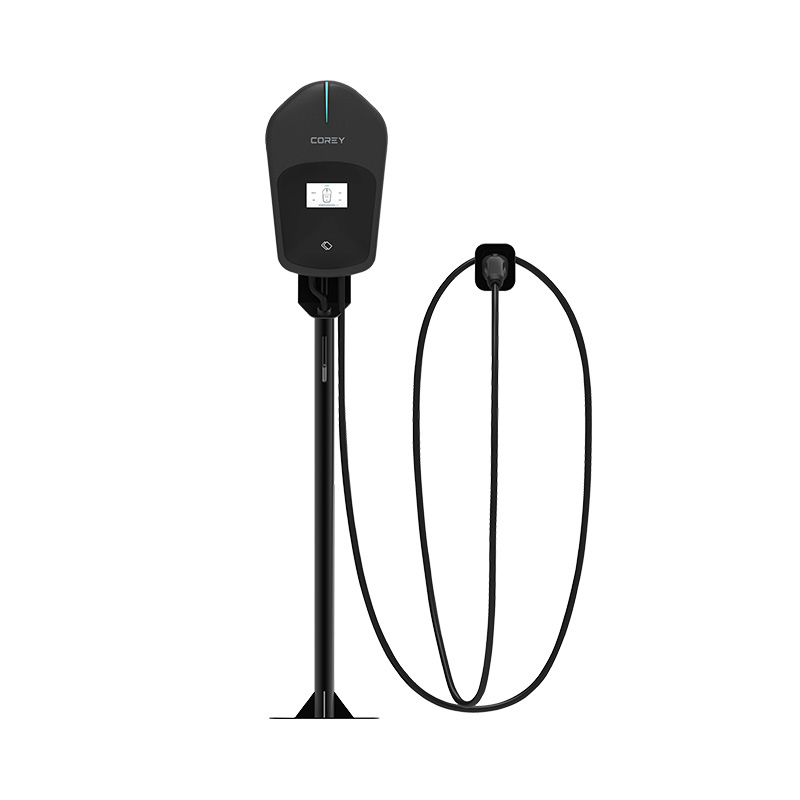
Different power ratings serve very different operational needs. We must evaluate them based on charging speed, standard duration, and ideal usage contexts. Selecting the right hardware ensures you wake up to a full battery without overloading your panel.
A 7kW EV Charger serves as the backbone of home charging. It adds roughly 40 to 50 kilometers (25 to 30 miles) of range per hour. If you drive a typical commuter route, this easily replaces your daily mileage in under two hours.
When charging from a 20% state of charge (SoC) to 80%, a 60kWh battery pack takes about 6 to 8 hours. Larger 80kWh packs require 8 to 10 hours. This perfectly aligns with domestic overnight schedules. You plug in after dinner, and the car is ready before breakfast.
An 11kW setup offers a massive efficiency leap if you have three-phase power. It adds 65 to 75 kilometers (40 to 47 miles) of range per hour. This speed makes it highly versatile.
To go from 20% to 80% SoC, a 60kWh pack needs only 3.5 to 4.5 hours. An 80kWh pack finishes in 4.5 to 5.5 hours. We consider this the optimal middle ground for modern three-phase properties. It works brilliantly for workplace destination parking or multi-vehicle households sharing a single driveway.
A 22kW station represents the fastest possible AC charging. It can add up to 140 kilometers (85 miles) of range per hour. A massive 80kWh battery goes from 20% to 80% in under 2.5 hours.
However, we must apply a reality check. Very few passenger cars carry a 22kW OBC. If you plug a standard 11kW car into a 22kW station, the station throttles down. You receive exactly 11kW of power. This makes native 22kW setups best suited for commercial turnarounds or specific high-end fleet models.
Real-World Charging Time Matrix
Battery Capacity | 7kW (Single-Phase) | 11kW (Three-Phase) | 22kW (Three-Phase) |
|---|---|---|---|
40 kWh | ~4.5 Hours | ~3 Hours | ~1.5 Hours |
60 kWh | ~7 Hours | ~4.5 Hours | ~2.5 Hours |
77 kWh | ~9 Hours | ~6 Hours | ~3 Hours |
100 kWh | ~11.5 Hours | ~7.5 Hours | ~4 Hours |
Before installing any equipment, you must assess your property's electrical foundation. Many installations fail during the permitting phase because buyers skip this critical audit. A proper evaluation ensures safety and compliance.
You must calculate your existing household peak loads. We look at heavy appliances like HVAC systems, heat pumps, and induction cooktops. Charging a vehicle acts as a continuous load, pulling maximum current for hours. Electrical codes generally enforce an 80% continuous rating rule. This means a 40-amp breaker safely supports a 32-amp continuous draw. You must confirm your panel has sufficient ampacity headroom before proceeding.
Geographical constraints heavily influence three-phase availability. In many older residential neighborhoods, utility companies only run single-phase lines. Upgrading to three-phase requires structural grid modifications. This involves utility application processes, physical hookups, and meter replacements. You must check with your local network operator before planning an 11kW or 22kW installation.
The distance between your fuse box and the parking bay dictates your cabling requirements. High-power continuous loads require specific wire gauges to prevent overheating. A 32A continuous draw requires 6mm² or 10mm² cables. In contrast, a 16A setup might only need 2.5mm² or 4mm² cables.
Long cable runs to detached garages suffer from voltage drop. Electricians mitigate this by upscaling the wire gauge. Proper trenching and conduit routing protect these heavy cables from environmental damage.
Safety regulations govern how we connect high-draw appliances to the grid. Modern charging setups utilize smart technologies to prevent localized blackouts and protect users from electrical faults.
Dynamic Load Management prevents your charging station from tripping the main service fuse. DLM is absolutely critical for high-draw 11kW and 22kW units. The system uses current sensing mechanisms, usually CT (Current Transformer) clamps, attached to your incoming mains.
If you turn on an electric shower and an oven simultaneously, the overall house load spikes. The DLM system detects this spike instantly. It then automatically throttles the vehicle's charging current down. Once you turn off the appliances, the system safely ramps the charging speed back up.
Direct current leaks pose severe risks to household electrical systems. Standard home consumer units use Type A RCDs (Residual Current Devices). However, EVs can leak DC current back into the house, which blinds a standard Type A RCD. Therefore, regulations mandate specialized protection.
Installers must use a Type B RCD or an integrated Type A RCD alongside a 6mA DC residual direct-current detecting device (RDC-DD). Additionally, regions like the UK enforce strict open PEN (Protective Earth and Neutral) conductor detection standards. The hardware must automatically disconnect all phases and earth if it detects a broken neutral fault on the grid.
Utility networks require notifications when you add large loads to local transformers. In the UK, you must submit a DNO (Distribution Network Operator) notification. If you install a standard 7kW unit and your home supply meets certain criteria, you can often notify the DNO after installation. For higher-rated installations, you usually need prior utility interconnection approval to ensure the local transformer can handle the extra demand.
Matching the hardware to your lifestyle prevents frustration. We developed a clear framework to help you choose the right capacity based on practical scenarios.
If your daily travel stays under 100 kilometers and your car parks overnight for more than 8 hours, keep it simple. We highly recommend a 7kW setup for this scenario. It offers the optimal balance of utility and practicality. You will rarely need more speed for standard domestic routines.
Perhaps you have two EVs sharing a single supply. You might deal with short turnaround times between afternoon errands. If your home already features a three-phase supply and rooftop solar, an 11kW EV Charger with Dynamic Load Balancing is ideal. It matches the standard AC limit of modern cars and maximizes daytime solar consumption efficiently.
Commercial spaces face high vehicle turnover and short dwell times. They natively possess commercial three-phase supplies. For these environments, we recommend a robust 22kW system. This setup caters to premium fleet vehicles with large OBCs. Integrating RFID readers and billing software ensures smooth multi-user management.
Before purchasing hardware, complete these steps to guarantee a seamless installation:
Verify your car's manual for its maximum AC charging rate (kW).
Request an electrical load calculation from a licensed, certified electrician.
Determine if your local utility imposes peak-demand charges on higher-amperage draws.
A higher kilowatt rating does not magically guarantee a faster charge. The raw number remains entirely secondary to proper system matching. Your property's supply capacity, your vehicle's onboard converter limitations, and your daily mileage demands must align perfectly. Ignoring these factors leads to wasted capacity and unmet expectations.
Avoid premature overspending on massive 22kW infrastructure if an 11kW or 7kW unit meets your practical operational demands. Most modern drivers find single-phase 7kW units more than capable of handling overnight replenishment. If you possess three-phase power, 11kW offers the perfect future-proof sweet spot.
Before you make a purchase, consult your vehicle's onboard specifications. Schedule an on-site electrical panel audit with a qualified professional. Doing the groundwork today ensures a seamless, efficient, and reliable charging experience for years to come.
A: Native 22kW speeds strictly require three-phase power. If you connect a 22kW unit to a single-phase supply, the hardware automatically throttles down. It will deliver a maximum of 7.4kW (32A). This renders the extra investment in the larger unit redundant unless you plan to upgrade your grid phase later.
A: No. The electric vehicle and the supply equipment perform a protocol handshake before any power flows. The car automatically negotiates the draw and physically limits the intake to its internal OBC rating (11kW). This process ensures absolute safety and prevents battery damage.
A: Not always. If your car has a single-phase-only 7.4kW onboard charger, it can only pull from one phase. An 11kW three-phase charger delivers 3.7kW per phase (at 16A). The car will draw from just that single phase, charging at 3.7kW. This is actually slower than a standard 7kW single-phase supply.
A: All residential and workplace AC charging speeds (7kW to 22kW) operate at low C-rates. This means the energy flows slowly relative to the battery's massive size. This keeps thermal stress negligible. Unlike high-voltage DC fast charging, daily AC charging keeps battery longevity completely intact.
A: It depends on your current main fuse, which typically ranges from 60A to 100A. Most modern electrical panels support a dedicated 32A draw directly. However, if your home runs substantial existing loads like electric heating or induction stoves, you may require panel consolidation or dynamic load shedding.


