
Views: 0 Author: Site Editor Publish Time: 2026-11-05 Origin: Site


Scaling energy storage and electric vehicle manufacturing presents massive operational hurdles. You must increase throughput rapidly while maintaining zero-defect safety standards. Balancing speed against precision is an ongoing daily struggle on the factory floor. Transitioning bare cells into a completed module is a remarkably high-stakes process. Even minor manufacturing variances during assembly can lead to catastrophic thermal failures later in the field. Therefore, selecting the correct equipment architecture for your facility directly dictates your operational success and return on investment.
We will explore the critical stages of battery module assembly and evaluate differing automation strategies. You will learn how to balance throughput goals against capital expenditure when configuring your layout. This guide explores modular flexibility, end-of-line testing protocols, and essential software integrations. Ultimately, this article equips operations and engineering leaders to make informed, future-proof decisions when comparing vendor equipment capabilities.
Consistency is ROI: Precision in early stages (cell sorting and grading) drastically reduces End-of-Line (EOL) failure rates and warranty claims.
Automation Matches Volume: The choice between an Automatic Battery PACK Production Line and a Semi-Automatic setup depends strictly on throughput demands, labor costs, and product mix variance.
Future-Proofing is Mandatory: A Flexible Module PACK Production Line minimizes downtime when shifting between prismatic, pouch, or cylindrical cell architectures.
Data Integration is Standard: Modern lines must integrate with Manufacturing Execution Systems (MES) for full traceability and compliance tracking.
Every Battery PACK Production Line follows a highly structured sequence. The primary purpose is transforming individual cells into a secure, power-ready module. Process bottlenecks frequently occur during testing and welding stages. Modern manufacturing lines solve these delays through parallel processing and intelligent routing. Let us examine the standard workflow step-by-step.
Incoming cell variance is an unavoidable implementation reality. Suppliers deliver cell batches containing slight chemical deviations. Automated sorting stations measure Open Circuit Voltage (OCV) and Internal Resistance (IR) rapidly. Grouping cells by similar electrical profiles ensures long-term module balance. Skipping this rigorous grading step drastically increases premature cell degradation and module failure.
Surface preparation remains a non-negotiable step for weld integrity. Manufacturers typically evaluate plasma cleaning against laser ablation for this task. These technologies strip away microscopic contaminants and oxide layers from battery terminals. Clean surfaces guarantee lower electrical resistance across the busbar connections. Poor cleaning leads directly to weak welds and dangerous localized heating.
Thermal management poses a massive risk factor during cell stacking. Automated dispensing systems apply thermal interface materials (TIM) uniformly across the module base. This precision application prevents hazardous localized hot spots. Consistent TIM volume protects the final module against thermal runaway events. Manual gluing often results in dangerous air gaps beneath the cells.
Engineers must establish strict evaluation criteria when selecting joining technologies. You will usually compare laser welding against ultrasonic wire bonding. Laser welding offers high operational speed and deep penetration profiles. It suits high-volume automotive applications perfectly. Conversely, ultrasonic wire bonding provides easier rework capabilities. The thin bonding wires also act as physical fuses during extreme overcurrent events.
Attaching the Battery Management System requires delicate precision. Proper routing of voltage sensing wires is crucial for accurate monitoring. Finally, sealing the outer casing ensures robust environmental protection. The final assembly undergoes IP67 or IP68 testing. This step confirms absolute moisture and dust resistance before shipment.
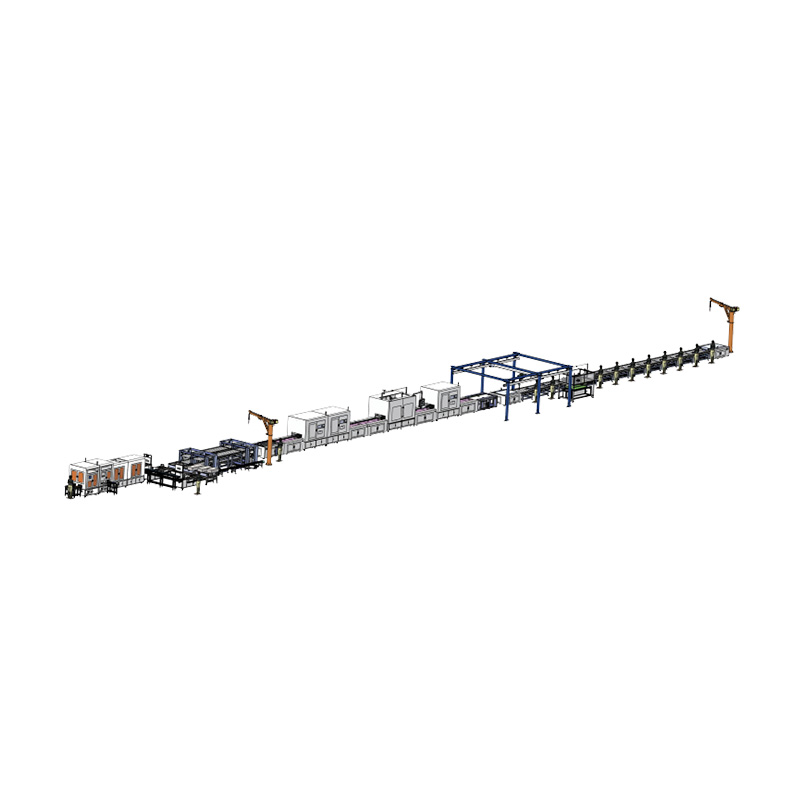
Selecting the correct automation level requires a clear decision framework. You must objectively assess your business maturity, product scale, and regional labor dynamics.
A Semi-Automatic PACK Production Line fits specific operational profiles effectively. It excels in prototyping environments and low-volume production runs. Regional facilities facing lower labor costs also benefit greatly from this setup. It requires a significantly lower initial capital expenditure. Troubleshooting mechanical issues is often faster and less complex. However, it carries a higher risk of human error. Quality-critical steps like wire routing or manual dispensing suffer from inconsistent manual handling.
Conversely, an Automatic Battery PACK Production Line targets massive manufacturing scale. It suits gigafactories, high-volume EVs, and grid-scale ESS production. These robust systems demand high initial capital investment. They also require rigorous integration periods before launch. Yet, they deliver unmatched cycle times and strict process repeatability. At full capacity, they achieve a substantially lower cost-per-unit.
You must carefully model the cost-to-outcome ratio before purchasing. Calculate your break-even point by factoring in long-term labor reduction. Include the expected minimization of daily scrap rates. Do not forget to factor in the revenue gains from higher daily throughput yields.
Evaluation Metric | Semi-Automatic Architecture | Fully Automatic Architecture |
|---|---|---|
Initial Capital Expenditure | Lower investment; easier funding approval. | High investment; requires extensive capital. |
Cycle Time & Throughput | Moderate; dependent on operator speed. | Exceptionally high; paced by machine limits. |
Process Consistency | Variable; prone to manual handling errors. | Extremely high; strict dimensional repeatability. |
Best Application Fit | Prototyping, low-volume mix, niche markets. | Gigafactories, mass EV platforms, ESS grids. |
The energy storage industry constantly shifts toward varied battery chemistries. Form factors evolve rapidly from large cylindrical cells to prismatic and pouch variants. Flexibility serves as a critical risk-mitigation strategy for modern manufacturers.
Traditional rigid lines present a severe retooling challenge. Moving from 4680 cylindrical cells to prismatic formats causes massive disruption. The financial cost of replacing hard-tooled fixtures is astronomical. Facility downtime during these transitions eats directly into annual profit margins.
Implementing a Flexible Module PACK Production Line eliminates these persistent bottlenecks. Adapting your equipment to new market demands becomes a streamlined process.
Core features of a modern flexible line include:
Modular workstation design: You can swap plug-and-play modules for different joining technologies easily.
Adjustable tooling mechanisms: Conveyors and clamps adapt quickly to varying module dimensions.
Vision-guided robotics: Robotic end-effectors utilize cameras to handle unpredictable dimensional tolerances smoothly.
Industry evidence strongly supports this architectural shift. Manufacturers utilizing flexible setups report up to 40% faster changeover times. This operational agility directly protects gross margins during sudden product pivots.
Quality assurance is essential for trustworthy and authoritative manufacturing. Every completed module must undergo rigorous validation before leaving the facility. These tests guarantee long-term safety and performance.
Critical EOL validation involves several specialized procedures:
Charge and discharge cycle testing: This validates operational capacity and confirms thermal stability under load.
BMS communication verification: The line ensures the master controller reads sensor data correctly.
High-pot and insulation resistance testing: Dielectric withstand checks prevent future short circuits.
Air tightness and leak testing: Pressure-decay methods validate coolant loops and external casings.
Global compliance relies entirely on robust digital traceability. Modern lines integrate seamlessly into Manufacturing Execution Systems (MES). Every finished pack must possess a comprehensive digital twin. The MES tracks raw material batches and specific weld parameters constantly. It binds individual test results directly to unique serial numbers. This meticulous tracking meets stringent global automotive standards. If a field failure occurs, engineers can isolate the exact production batch instantly.
Transitioning from planning to procurement requires systematic vendor evaluation. You must shortlist integrators based on holistic facility compatibility. Narrowing down your options prevents costly installation delays.
First, assess your facility footprint and utility requirements thoroughly. High-speed automation demands substantial floor space for robotic movement. Review the peak power draw requirements for heavy laser welding stations. Ensure your HVAC systems can maintain strict dry room humidity levels consistently.
Next, evaluate the vendor ecosystem and ongoing engineering support. Hardware is only one part of the complex purchasing equation. You must evaluate integrators based on post-sale maintenance capabilities. Verify their spare parts availability within your specific geographic region. Negotiate strict local service level agreements (SLAs) to minimize unplanned production downtime.
Finally, demand software agnosticism from your equipment providers. Your new line will utilize PLC and SCADA control systems. These systems must communicate seamlessly into existing enterprise software. Avoid proprietary data lock-in at all costs. Open architecture ensures future software upgrades remain cost-effective and straightforward.
A completed battery pack is only as reliable as the assembly line building it. Engineering precision on the factory floor directly influences field safety and brand reputation. Rushing the integration process often yields poor manufacturing outcomes.
Keep these strategic action items in mind:
Prioritize process stability and repeatability over raw operational speed.
Ensure absolute data traceability across every manufacturing stage.
Invest in flexible tooling to accommodate future battery chemistries safely.
Partner alongside integrators offering robust local maintenance support.
It is time to audit your current throughput bottlenecks objectively. Map out exactly where manual interventions slow down your daily yield. We encourage you to request a feasibility study from trusted equipment integrators. A customized architecture assessment will reveal hidden optimization opportunities for your specific layout.
A: Deploying a fully automated system usually requires 6 to 12 months. This timeline covers initial engineering design and custom equipment fabrication. It also includes rigorous Factory Acceptance Testing (FAT) before shipment. Finally, engineers conduct Site Acceptance Testing (SAT) after installation to guarantee operational readiness.
A: Yes, upgrading is entirely possible if planned early. You must utilize a modular design approach from the start. The initial conveyor logic and workstation footprints must accommodate future robotic integration. Phased upgrades help manufacturers spread out capital expenditures while scaling output safely.
A: Laser welding and End-of-Line (EOL) testing typically create the most significant pacing bottlenecks. Laser welding requires extreme precision and alignment checks. EOL testing demands extended time for charge cycles and safety validation. Manufacturers often install parallel testing stations to mitigate these unavoidable delays.
A: Flexible lines handle physical differences via adjustable robotic tooling and vision systems. However, chemistry dictates facility safety needs. Your environmental controls and fire suppression systems must be rated for the most volatile chemistry processed. Upgrading safety protocols is mandatory when switching between LFP and NMC cells.


