
Views: 0 Author: Site Editor Publish Time: 2026-11-10 Origin: Site


Battery pack manufacturing has shifted dramatically in recent years. Energy density demands continue to rise rapidly across the industry. Manufacturers are actively moving away from outdated manual techniques. Automated double-sided spot welding now heavily influences modern production standards.
The core engineering challenge remains abundantly clear. Producers must secure consistent electrical contact between individual cells. They must achieve this without causing any thermal degradation to the sensitive components. Heat damages delicate battery cores quickly.
This article evaluates how equipment architecture impacts overall pack performance. We explore how a Battery Module Spot Welding Machine directly influences long-term reliability. You will learn about assembly throughput, process speed, and critical weld quality criteria. We also break down the exact parameters needed for sustained manufacturing success.
Uniformity: How double-sided welding eliminates "cold joints" by balancing heat distribution from both sides of the busbar/tab interface.
Throughput: Scaling assembly speed via automatic double-sided welding machine integration compared to traditional single-sided methods.
Integrity: Reducing internal resistance and micro-cracking risks inherent in high-stress battery cell connections.
Verification: Why structural weld integrity is a prerequisite for safety compliance in EV and energy storage systems.
We begin by examining the constraints of older assembly methods. Single-sided approaches present distinct engineering hurdles for high-density packs. Heat concentration issues plague these legacy systems constantly. Uneven heat-affected zones (HAZ) occur frequently during the fusion process. The electrical current flows entirely through a single entry point. The material directly beneath the electrode absorbs intense, localized thermal energy. Meanwhile, the opposing side remains significantly cooler. This severe temperature imbalance distorts the metal structure and weakens the joint.
Manufacturers also face the dangerous "invisible" failure phenomenon. External bonding often looks perfectly acceptable to visual inspectors. However, the lower contact surface remains inadequately fused. We call this the connection verification problem. You cannot easily detect a weak bottom layer through standard visual checks. A standard Single-Sided Welding Machine struggles to guarantee full penetration depth. Operators only see the top surface discoloration.
Material fatigue introduces another massive risk for engineers. Asymmetric stress distribution severely hurts mechanical stability. Electric vehicles operate in harsh, high-vibration environments daily. Uneven welds crack under constant mechanical stress. Connections fail prematurely during rigorous field use. Industry standards demand comprehensive vibration testing for all battery modules. A weak, asymmetrical joint will undoubtedly fail these strict safety compliance checks.
Relying entirely on surface discoloration to judge mechanical strength.
Ignoring the physical pull-strength data during initial batch testing.
Failing to account for thermal expansion differences between the busbar and the cell terminal.
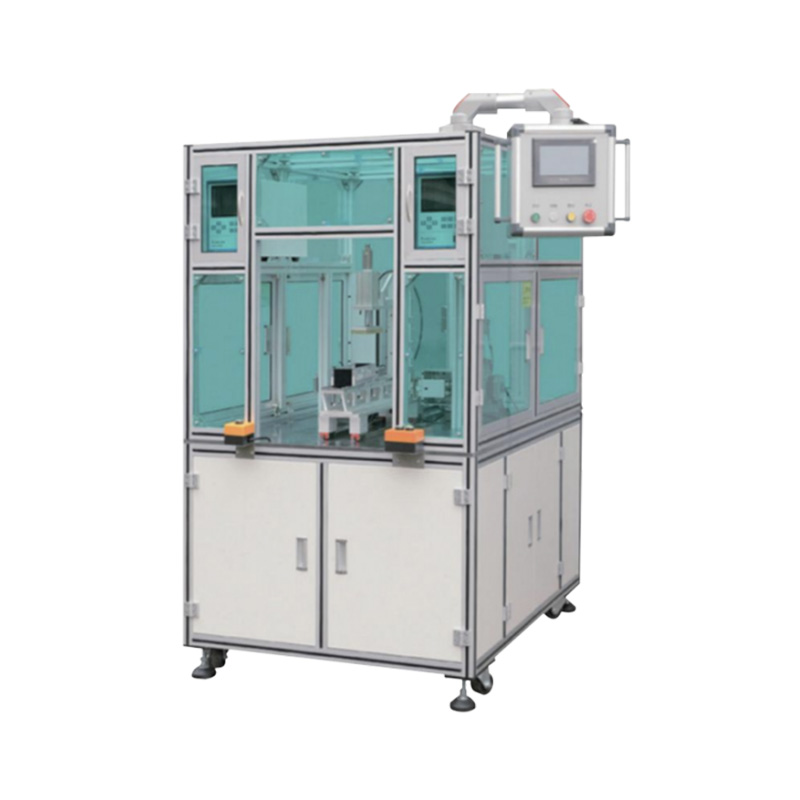
Bilateral energy delivery changes the manufacturing landscape completely. A modern Automatic Double-Sided Welding Machine transforms module assembly from the ground up. We see perfectly balanced thermal profiles during the joining process. The system delivers energy simultaneously from both sides of the connection. Heat distributes evenly across the busbar and the underlying tab. This eliminates the severe temperature gradients found in older methods. The materials melt and fuse symmetrically.
Increased structural integrity naturally follows this balanced approach. Bilateral penetration improves contact resistance dramatically. The process reduces localized electrical resistance points across the array. Symmetrical fusion creates a stronger, much more uniform weld nugget. The electrical pathway becomes highly efficient. Energy flows freely without bottlenecking at a poorly fused joint. Lower internal resistance directly prevents dangerous thermal runaway events.
Transitioning to automation accelerates these structural benefits further. Modern equipment utilizes highly advanced precision actuators. They manage variable contact pressure effortlessly during high-speed runs. Consistent clamping pressure ensures repeatable weld nuggets every single cycle. Multi-cell modules require thousands of perfect connections to function properly. Automation guarantees this critical consistency across the entire battery pack.
Calibrate actuator pressure sensors weekly to maintain clamping force accuracy.
Implement routine cleaning schedules for both upper and lower electrodes.
Verify bilateral alignment before beginning any large-scale production batch.
Engineers must evaluate the underlying power delivery technology carefully. We frequently compare a modern Transistor Spot Welding Machine against traditional methods. The distinct differences heavily impact overall battery safety and yield rates.
Pulse control precision sets transistor systems far apart from legacy tech. They operate seamlessly in constant current or constant voltage modes. These specific modes provide ultimate control over the energy delivery curve. Battery tabs require highly tailored heat inputs to fuse correctly. Transistor technology actively prevents accidental over-burning or weak under-welding.
Micro-second accuracy defines the modern energy discharge process. Ultra-fast discharge limits electrode damage significantly over thousands of cycles. The fusion process occurs so rapidly that heat cannot spread. Thermal energy does not have time to migrate into the battery core. We successfully protect the sensitive internal chemistry. The copper or tungsten electrodes also last considerably longer between mandatory dressing cycles.
Process consistency relies entirely on digital closed-loop monitoring. Built-in sensors provide real-time weld quality feedback instantly. The machine adjusts its electrical parameters dynamically during the pulse. This capability reduces scrap rates massively compared to older AC welders. Traditional capacitor discharge systems cannot adjust mid-pulse. Closed-loop transistor systems ensure every single joint meets exact engineering specifications.
Table Title: Weld Quality Characteristics by Power Source
Technology Type | Pulse Control Capability | Thermal Impact on Battery Core | Real-Time Feedback Loop |
|---|---|---|---|
Alternating Current (AC) | Low (Sine wave dependent) | High (Extended heat application) | None |
Capacitor Discharge (CD) | Moderate (Fixed spike) | Medium (Fast, but uncontrolled) | None |
Transistor / High-Frequency | Very High (Square wave precision) | Very Low (Micro-second duration) | Yes (Closed-loop adjustment) |
Selecting the right equipment requires strict evaluation criteria. We must look far beyond basic operational specifications. Manufacturers should focus intensely on four primary pillars of performance.
Throughput and Scalability: Assembly speed dictates your market competitiveness. You must estimate cycles-per-module accurately before purchasing. Automated indexing capabilities largely determine this overall speed. The machine must move quickly and precisely between cell positions. Fast transition times compound into massive daily production gains.
Integrated Quality Control (QC): Comprehensive data logging is completely mandatory today. Regulatory compliance requires full traceability for automotive applications. The system must monitor weld strength metrics continuously. It must log exact voltage and current parameters for every single joint. This data proves invaluable during safety audits.
Flexibility: Pack designs evolve and change rapidly. The machine must handle varying tab thicknesses easily. It must fuse multi-material stacks without major hardware changes. Copper-nickel transitions present unique metallurgical challenges. Aluminum tabs require highly specific parameter adjustments to break through oxide layers.
Operational Risks: Unplanned downtime halts production and destroys margins. Evaluate recommended maintenance windows carefully. Monitor electrode wear cycles closely during trial runs. Assess the ease of recalibrating the software for new module designs. The user interface should allow rapid changeovers for operators.
Moving from a theoretical concept to active production requires a structured roadmap. You cannot simply install the machine, plug it in, and begin manufacturing. We recommend a strict, phased approach for integrating these complex automated systems.
Design for Manufacturing (DFM) represents the absolute first step. Engineers must align tab geometry properly during the CAD phase. Electrode accessibility remains crucial for double-sided machines to function. Both the upper and lower electrodes need clear, unobstructed pathways to the joint. Complex pack geometries often block physical access entirely. Early DFM reviews prevent these costly physical clashes on the factory floor.
Pilot verification actively validates your initial machine parameters. Tensile testing proves the mechanical strength of the bond. Micro-section analysis reveals the internal nugget structure clearly. Technicians pot the weld in resin, polish it, and examine it under a microscope. You must cross-reference these physical tests against the system's digital data. This exercise confirms the machine actually reads the weld characteristics accurately.
System integration finalizes the deployment phase. Modern facilities connect welding output data directly to their networks. They link the machine straight to their Manufacturing Execution Systems (MES). This integration enables full traceability across the entire plant floor. If a field failure occurs, operators can trace it back immediately. They can review the exact weld parameters recorded on that specific day.
Moving to a double-sided automated approach is clearly no longer optional. It stands as a strict quality imperative in today's market. High-density battery packs demand absolute perfection from assembly lines. Minor joint failures easily cascade into major thermal events.
We see a profound operational return on investment when implementing these systems. Reduced failure rates protect your reputation heavily. Enhanced structural integrity builds immense brand trust regarding safety. Consumers demand completely safe electric vehicles and robust energy storage systems.
To improve your manufacturing outcomes, consider these actionable steps:
Conduct a comprehensive production audit today to find hidden flaws.
Identify current bottleneck points in your existing assembly line.
Evaluate where single-sided methods currently compromise final module reliability.
Transition critical connections to bilateral automated systems immediately.
Implement strict micro-section testing for all new material stacks.
A: Transistor welding provides micro-second pulse control and closed-loop feedback. It operates in constant current or voltage modes. Traditional AC or capacitor discharge methods release energy without real-time adjustments. Transistor systems prevent overheating and ensure highly repeatable fusion for sensitive battery tabs.
A: Double-sided welding delivers energy simultaneously from both sides of the joint. This balanced thermal profile reduces the total energy needed. It prevents heat from concentrating in one spot. The ultra-fast process confines the heat-affected zone, protecting internal battery chemistry.
A: Yes. Modern machines feature automated indexing and programmable logic controllers. They connect seamlessly to existing conveyors and Manufacturing Execution Systems (MES). You must verify electrode clearance and tab accessibility during the integration planning phase.
A: Quality metrics include contact resistance, tensile pull strength, and nugget penetration depth. Manufacturers use micro-section analysis to verify physical depth. Production machines monitor voltage drops, current delivery profiles, and electrode displacement in real-time to flag anomalies.
A: Absolutely. Double-sided techniques adapt well to varying geometries. Cylindrical cells often use nickel strips. Prismatic cells usually feature thicker aluminum or copper busbars. The machine parameters adjust to match the specific material stacks and thicknesses of each format.


