
Views: 0 Author: Site Editor Publish Time: 2026-08-11 Origin: Site


Transitioning from grid reliance to energy independence requires more than solar panels; it requires reliable energy storage. Without a robust battery, you remain vulnerable to sudden blackouts and fluctuating utility rates. We are currently observing a massive shift in net-metering policies, such as the introduction of NEM 3.0, alongside increasing grid instability. These specific factors are driving the rapid adoption of residential energy storage solutions worldwide. However, choosing the right setup can quickly feel overwhelming.
Our objective here is to strip away the confusing marketing jargon. We provide a realistic, spec-driven framework for evaluating, sizing, and selecting a system. You will discover exactly how to navigate complex hardware specifications, installation hurdles, and dense warranty clauses. By the end of this guide, you will know how to find a system perfectly aligned to meet your specific resilience goals and maximize your daily operational efficiency.
A complete Home BESS requires evaluating the battery chemistry, inverter compatibility, and Battery Management System (BMS), not just storage capacity.
Distinguish between "continuous power" (running appliances) and "storage capacity" (how long they run) to avoid undersizing.
Retrofitting existing solar arrays versus installing a new integrated system dictates the choice between AC-coupled and DC-coupled architectures.
True ROI depends on local Time-of-Use (TOU) rates, net metering policies, and realistic lifespan assumptions governed by warranty throughput clauses.
A complete Home BESS operates as a highly complex ecosystem. It relies on multiple distinct hardware and software components working in unison. We must evaluate these components individually to establish accurate baseline evaluation criteria.
Battery Modules: These represent the physical cells storing your energy. Chemistry dictates performance here. You will primarily encounter Lithium Iron Phosphate (LFP) and Nickel Manganese Cobalt (NMC). LFP cells offer superior thermal stability. They resist thermal runaway exceptionally well. They also deliver a substantially longer cycle life. NMC packs are slightly more energy-dense and lighter. However, they degrade much faster over daily charge cycles. We generally recommend LFP chemistry for daily residential cycling.
Inverter: This crucial unit converts direct current (DC) into alternating current (AC). You can select a hybrid model or a standalone unit. Energy conversion naturally creates friction. You face clipping and conversion losses during this step. If your solar panel output significantly exceeds your inverter rating, you lose potential power. A high-quality inverter minimizes these daily efficiency drops.
Battery Management System (BMS): Think of the BMS as the operational brain. This software layer continuously monitors individual cell voltages. It actively prevents deep discharge events. It also manages temperature regulation to mitigate thermal runaway risks. You absolutely cannot safely operate lithium-based storage without a sophisticated BMS.
System architecture defines how these components physically connect to your home.
AC-Coupled: This design converts DC to AC twice. It works best for retrofitting existing solar setups. You do not have to replace your current solar inverter. It installs cleanly alongside your legacy equipment.
DC-Coupled: This design keeps energy in DC form until it enters your main panel. It achieves significantly higher round-trip efficiency. You should choose this architecture for new, ground-up solar-plus-storage installations.
Best Practice: Always verify your chosen inverter communicates natively with your preferred battery modules. Mismatched communication protocols often cause frequent system reboots and lost power generation.
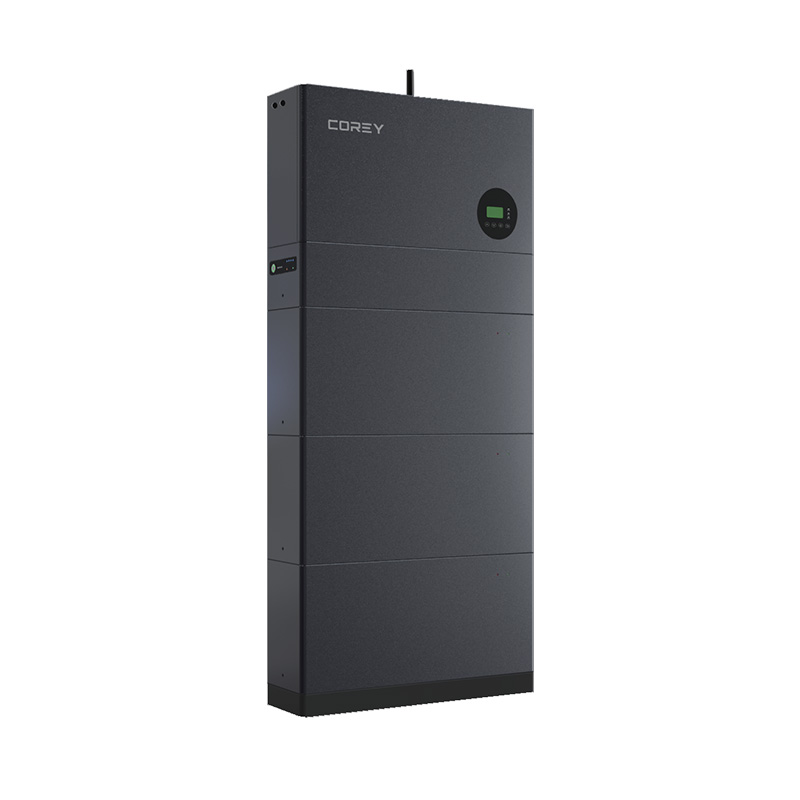
When you evaluate solar battery storage for home, you need a strict vendor-neutral scorecard. Marketing materials often blur crucial performance boundaries. You must distinguish between distinct metrics to compare competing brands accurately.
People frequently confuse capacity with power output. They describe entirely different capabilities. We have broken down the core metrics you must evaluate.
Metric | Definition | Why It Matters |
|---|---|---|
Usable Capacity (kWh) | The actual volume of extractable energy, excluding safety buffers. | Dictates exactly how many hours your appliances will run during an outage. |
Continuous Power (kW) | The steady output rate the system maintains endlessly. | Determines how many devices you can run simultaneously. |
Peak Power (kW) | Short-burst capability lasting typically 10 to 30 seconds. | Crucial for starting heavy motor loads like well pumps or compressors. |
Usable Capacity measures the actual volume of energy you can extract. It differs significantly from total nominal capacity. Manufacturers reserve a protective buffer to maintain cell health. You only care about the usable figure. Do not evaluate a system based on its gross nominal rating.
Continuous Power determines what you can run simultaneously. A high continuous rating lets you operate an HVAC unit and a well pump together. Peak Power reflects short-burst capabilities. Electric motors require massive surges to start. Your system must handle this brief inrush current safely.
We also look closely at Depth of Discharge (DoD) and Round-Trip Efficiency. Look for strict performance benchmarks. We recommend seeking a 90% or higher DoD limit. Round-trip efficiency should routinely exceed 85%. This metric ensures you retain most of your harvested solar energy. Low efficiency means you lose power simply by moving it in and out of storage.
Finally, examine scalability. Modular stacking capabilities allow future expansion. However, manufacturers impose hard limits on daisy-chaining units. You must verify exactly how many modules a single inverter can manage. Some systems limit you to three units, capping your future growth.
Common Mistake: Many homeowners buy massive capacity (kWh) but ignore continuous power (kW). They end up with a huge battery unable to start their air conditioner.
Moving from product specs to a specific use case is a critical step. A single universal approach simply fails in residential energy storage. You must frame your success criteria around your daily habits. Proper sizing requires an honest assessment of your home battery backup requirements.
Backing up an entire house presents massive challenges. It requires immense storage banks and huge power output. We see rapid diminishing returns when attempting true whole-home backup. You will face heavy hardware investments to run luxury items.
Instead, you need a critical loads panel. This physical sub-panel isolates essential circuits. You should prioritize refrigeration, lighting, medical equipment, and internet routers. Active load shedding technology also helps immensely. Smart panels automatically drop heavy appliances during outages, preserving your stored energy for the essentials.
Many utility companies charge heavily inflated rates during evening hours. You can calculate the daily cycle required to avoid these peak grid rates entirely. You store cheap solar energy during the morning and afternoon. You then discharge it during peak evening windows.
This strategy demands durable cell chemistry. You need a system specifically designed for deep daily cycling. If you plan to drain the system every evening, LFP chemistry becomes mandatory to survive the intense usage cycle.
Some homeowners require complete independence during multi-day weather events. You must size your system for worst-case scenarios. Remember the strict dependency on solar array recharge rates.
Winter storms or heavy cloud cover drastically reduce your recharge speed. You might only generate a fraction of your summer output. You need enough excess capacity to bridge these long generation gaps. Off-grid sizing requires detailed historical weather analysis, not just basic power math.
Hardware selection covers only half the battle. Installation introduces hidden hurdles. We want to expose common project pitfalls so you can prepare adequately. Trustworthy installations account for the surrounding electrical infrastructure, not just the new equipment.
Your existing electrical panel might limit your entire project. A standard 100-amp or 200-amp panel often requires an expensive upgrade. Modern load requirements easily exceed old busbar limits.
If your panel lacks the required rating for backfed breakers, you face major delays. You might need to install a smart sub-panel instead. Smart panels provide granular control over individual circuits, sometimes bypassing the need for a full MSP upgrade.
Where you physically place the equipment matters immensely.
Verify local clearance requirements around the hardware for ventilation.
Assess temperature constraints in the chosen mounting location.
Avoid installing modules in direct sunlight or unshaded exterior walls.
Keep units out of freezing, uninsulated garages.
Extreme ambient temperatures severely impact cell life. Freezing temperatures cause lithium plating, which destroys capacity. High heat accelerates chemical degradation. Climate control extends system life significantly.
Local bureaucracy frequently slows down rollout schedules. You should expect realistic timelines stretching several weeks to months. Dealing with utility interconnection agreements takes immense patience.
You must also satisfy stringent local fire codes. Inspectors often require specific structural setbacks. They may mandate fire-rated barriers between the equipment and your living space. Failing to plan for these code requirements causes failed inspections and costly rework.
You must read manufacturer guarantees through a highly skeptical lens. Marketing brochures highlight decades of reliability. The fine print often tells a completely different story. You need to understand the structural limitations of your coverage.
We evaluate warranties based on three fundamental pillars:
Years covered: The standard industry baseline sits at 10 years.
Cycle life: This specifies the absolute total number of full charge and discharge cycles permitted.
Energy Throughput: This defines the total megawatt-hours (MWh) passed through the unit over its life.
Energy throughput represents the most critical metric. We regularly see throughput clauses expire long before the 10-year mark. If you cycle the system heavily for daily arbitrage, you consume this allowance rapidly. For example, discharging 10 kWh daily equals 3,650 kWh annually. A strict throughput cap will void your warranty quickly.
Battery cells degrade naturally over time. You must ask what degradation level is acceptable to the manufacturer. A strong warranty guarantees 60% or 70% capacity remaining at year ten. Anything lower indicates lower-tier cell quality. If a brand only guarantees 50%, expect terrible performance in year nine.
Do not compromise on independent testing standards. You must verify mandatory certifications before signing a contract. Look closely for UL 9540, which covers complete Energy Storage Systems. Additionally, demand UL 9540A certification. This represents the rigorous Thermal Runaway Fire Test standard. It proves the system can contain a catastrophic cell failure without burning down your home.
We now move to actionable, bottom-of-funnel guidance. You possess the technical framework. You understand the hidden installation risks. You must now apply this knowledge logically to select the right equipment.
You cannot accurately size a system without granular usage data. Determine your exact peak usage times. Review twelve months of bills. Verify your current net metering status. This data dictates your strategy. It reveals whether you need a massive storage bank or a smaller, peak-shaving unit.
List your non-negotiable appliances for backup. Write them down clearly. Be ruthless in eliminating luxury loads from this essential list. A lean critical load profile saves significant hardware expenditure. Moving an electric oven or a hot tub to the non-essential list drastically reduces your required inverter size.
Never accept a lump-sum project estimate. Require your installers to break down the proposal thoroughly. They must separate hardware, labor, permitting fees, and potential electrical upgrade costs. This financial transparency lets you compare different installers accurately. It prevents hidden markups on legacy electrical work.
Choosing a residential storage solution acts as a serious infrastructure decision. It is not a simple, plug-and-play appliance purchase. You must integrate complex hardware directly into your daily life.
Aligning battery chemistry, continuous output capacity, and a clear daily use-case remains crucial. This specific alignment is the only valid way to ensure emergency resilience. It also guarantees your expected financial returns over the system's operational lifespan.
You must carefully evaluate your continuous power needs against usable capacity limits. Always plan for strict warranty throughput constraints. Ignore the glossy marketing hype and focus entirely on verifiable UL safety ratings and LFP cell chemistry.
Take the next logical step today. Consult with a certified local installer. Ask them to perform a detailed, site-specific load calculation based directly on your historical utility data.
A: Yes, it can. However, running central AC requires a remarkably high continuous kW output. It also significantly drains your total storage capacity in just a few hours. We highly recommend installing soft starters on your AC units. Soft starters drastically reduce the massive surge current required during the compressor's motor startup.
A: No, you do not. Standalone storage can easily charge directly from the grid. You can use it for emergency backup or daily Time-of-Use rate arbitrage. However, standalone setups lack certain tax incentives. They also lack the infinite recharge capability that paired solar arrays provide during extended, multi-day outages.
A: You should expect about 2-3% capacity degradation annually. This degradation rate depends heavily on the specific cell chemistry and your daily cycling depth. Always review your warranty's energy throughput clauses carefully. Heavy daily cycling accelerates degradation, which may potentially void the warranty long before the ten-year mark.
A: Your system initiates an automatic islanding process. A transfer switch safely and instantly disconnects your home from the external utility grid. This crucial safety step prevents your stored electricity from backfeeding into neighborhood power lines. It strictly protects utility workers repairing the external grid during the blackout.


