
Views: 0 Author: Site Editor Publish Time: 2026-11-21 Origin: Site


Operational success in energy storage hinges on one critical factor: controlling lithium-ion thermal runaway. When batteries fail, they release extreme heat and flammable gases, threatening the entire project. Modern fire safety is no longer just a perimeter defense; it is a deeply integrated system architecture. These systems are specifically designed to detect, contain, and suppress fire events before they destroy valuable assets. For project developers and engineers, choosing the right safety framework is essential during the procurement of a Containerized Battery Energy Storage System. This article provides an evidence-based approach to evaluating fire suppression technologies and architectural safety designs. You will learn how to balance suppression agents, cooling strategies, and regulatory compliance to ensure your facility remains safe, insurable, and operational throughout its intended service life.
Effective suppression relies on multi-sensor detection (off-gas, smoke, temperature) to intervene before thermal runaway propagates.
The choice of suppression agent (Aerosol, Clean Gas, or Water) dictates both the upfront footprint and the post-incident recovery costs.
High-density systems require advanced thermal management; integrating a 5MWh Liquid-Cooled BESS inherently reduces ignition risks compared to traditional air-cooled setups.
Procurement must prioritize systems certified to UL 9540A and compliant with NFPA 855 to ensure insurability and regulatory approval.
Uncontained battery fires create significant business problems. They lead to total asset loss, site contamination, and severe regulatory fallout. Understanding thermal runaway mechanics is essential for any facility operator. This event occurs when cellular degradation causes rapid, uncontrollable heat generation. It releases highly flammable off-gases like hydrogen and carbon monoxide. Your success criteria must shift from saving an ignited module to broader system protection. No fire suppression system can realistically salvage a battery cell already in runaway. Instead, success is defined by preventing container-to-container propagation. A robust design protects site personnel and minimizes expensive system downtime. You must view safety as a multi-stage defense strategy that stops a single fault from cascading into a disaster.
Modern fire safety relies on sophisticated detection and automated control. Moving away from reactive smoke detectors, leading designs now utilize proactive off-gas sensors. These VOC detectors identify electrolyte vapor minutes before visible fire appears. This early warning provides a critical window for intervention. The Fire Control Panel (FACP) serves as the localized brain of the system. It continuously evaluates sensor logic, triggers alarms, and executes automated shutdown sequences. You must also implement HVAC and electrical interlocks. Shutting down ventilation prevents oxygen from feeding a localized fire. Simultaneously, isolating electrical currents removes energy from the fault. Finally, pressurized chemical delivery networks flood the enclosure to suppress active flames. This coordinated effort is the hallmark of a high-quality Container BESS.
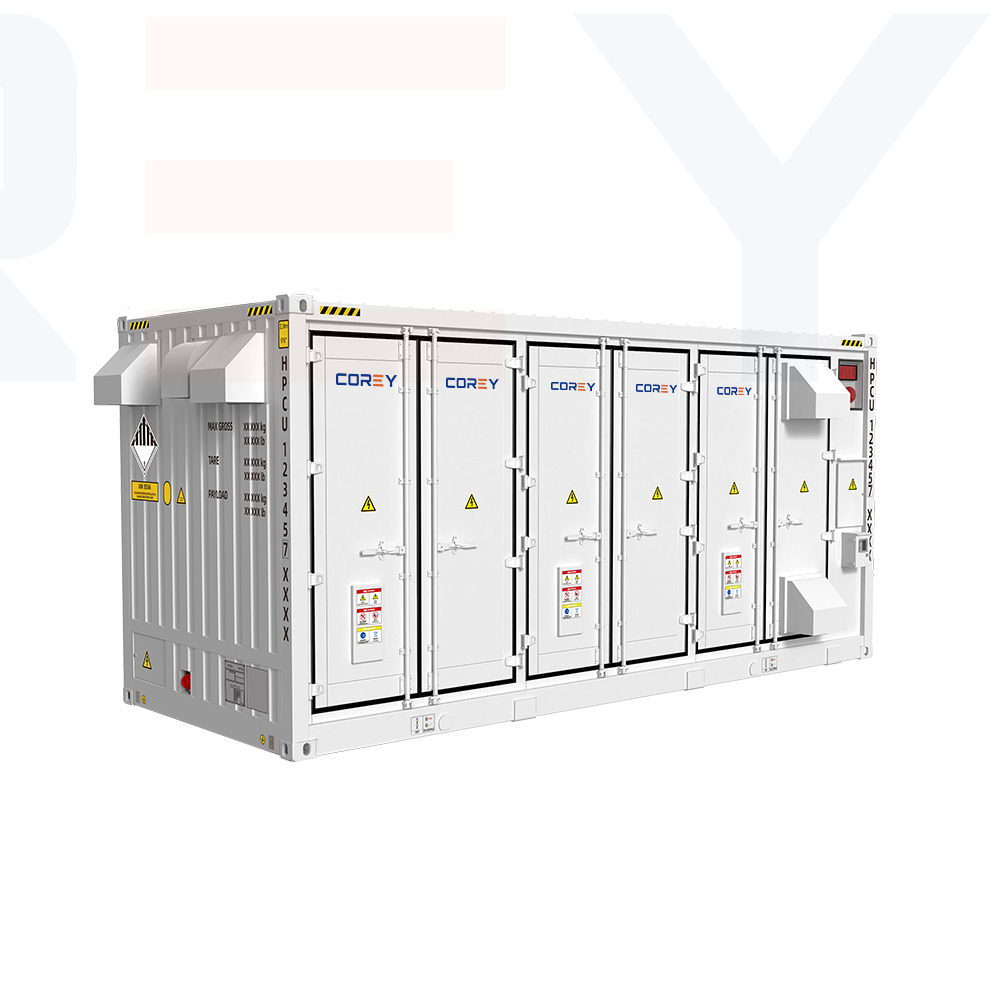
Selecting the right agent involves weighing performance against operational impact. Each method has distinct characteristics that influence your facility maintenance and safety profile. A table summarizing these common suppression agents:
Agent Type | Mechanism | Key Benefit | Primary Consideration |
|---|---|---|---|
Chemical chain disruption | No pressurized pipes | Particulate residue cleanup | |
Clean Agent Gas | Heat removal | Zero residue | Requires high seal integrity |
Water Deluge | Direct cooling | Proven thermal control | Electrical collateral damage |
Aerosol systems disrupt fire at a molecular level without requiring heavy pipes. They are highly compact and require minimal maintenance. Conversely, clean agent gases like Novec 1230 leave no residue, protecting sensitive electronics. They demand, however, that the container remains perfectly sealed during discharge. Water systems remain the standard for cooling deep-seated lithium-ion fires, though they introduce significant cleanup and electrical risks.
Scaling to a 5MWh Liquid-Cooled BESS presents unique safety challenges. Higher density requires superior thermal regulation to prevent hot spots. Liquid-cooled plates regulate cell temperatures within tight variances, often keeping them within 3°C of each other. This consistency drastically reduces the likelihood of localized thermal runaway. You should view cooling and suppression as complementary systems. Liquid cooling acts as a preventive measure, keeping cells stable under heavy load. Fire suppression serves as the necessary safety net for catastrophic outliers. A well-designed 5MWh Liquid-Cooled BESS integrates both, ensuring that your storage asset remains safe throughout its lifecycle.
Regulatory alignment is non-negotiable for project viability. You must adhere to NFPA 855 standards for stationary energy storage. Additionally, ensure your system passes UL 9540A testing, which evaluates how fire propagates at module and rack levels. Common integration risks often stem from field-based errors. For example, failing to seal an enclosure properly allows suppression gas to escape during discharge. Always verify that HVAC units shut down automatically when the system triggers. Maintenance is another crucial reality. You must schedule regular sensor calibrations, cylinder pressure checks, and lifecycle replacements for aerosol generators. Ignoring these checks invalidates your safety guarantees and threatens insurance coverage.
When shortlisting suppliers, prioritize those with pre-integrated solutions. Manufacturers who factory-install and rigorously test suppression systems provide higher reliability than field-based EPC installations. Always request detailed UL 9540A test reports. Review how the system performed at the module, rack, and unit levels to see if the data matches your project requirements. Evaluate the entire fire safety strategy through a long-term lens. Consider the cost of a full system reset, insurance premiums, and ongoing emergency responder compliance. A slightly higher upfront investment in an integrated safety design often saves substantial capital after an incident. By focusing on these technical and operational milestones, you protect your financial investment and ensure long-term reliability.
Fire suppression is a fundamental pillar of asset viability in the energy sector. It is not an optional accessory but a core design element of any modern Container BESS. Robust detection, balanced agent selection, and inherent safety designs like liquid cooling ensure compliance and protect your underwriting. Use the following next steps to solidify your safety strategy:
Demand certified UL 9540A documentation from all potential system providers.
Confirm the compatibility of your chosen suppression agent with local fire department capabilities.
Prioritize integrated cooling and fire detection systems to minimize maintenance complexity.
Schedule a formal safety audit for your site to ensure adherence to NFPA 855.
A: Typically, no. Once thermal runaway begins, the chemical reaction inside the cell is self-sustaining. The primary goal of a suppression system is to contain the event, prevent fire from spreading to adjacent modules or racks, and protect the overall container structure from total failure.
A: Most aerosol generators have a shelf life of approximately 10 to 15 years. They are generally low-maintenance compared to pressurized cylinders, as they lack complex piping and gauge monitoring. However, you should follow the specific manufacturer maintenance schedule to ensure reliability.
A: Yes. The Authority Having Jurisdiction (AHJ) holds final approval over fire safety systems. Their requirements for water supply, access, and suppression type often override general manufacturer specifications. Always involve local fire officials early in the site planning process.
A: If deflagration panels open to release pressure during an explosion, the concentration of the suppression gas will be lost, rendering the agent ineffective. This is why many designs incorporate secondary localized defenses, such as water connections for fire department use, to manage the situation after pressure relief.


