


A Commercial and Industrial Battery Energy Storage System (C&I BESS) sits perfectly between massive utility infrastructure and residential storage setups. We engineer these robust assets specifically to handle three-phase power. They easily manage frequent high-cycle demands and complex commercial tariffs. However, deploying these systems comes with distinct financial hurdles. C&I storage projects generally lack the straightforward government subsidies enjoyed by grid-scale projects. You must rely on rigorous, self-sustaining commercial logic to justify the initial capital expenditure. Successfully deploying a C&I BESS Cabinet requires looking beyond simply "buying batteries." Instead, you must evaluate an integrated system based on footprint flexibility, operational safety, and regulatory compliance. In this guide, we will explore the core drivers of project returns. We will compare different physical architectures. We will also outline the strict safety certifications necessary for seamless permitting. You will learn how to navigate common deployment bottlenecks. This ensures your business continuity remains fully protected against grid volatility.
Form Factor Dictates Strategy: For most commercial facilities, a modular C&I BESS Cabinet offers superior scalability and easier permitting compared to a massive CONTAINER BESS.
ROI is Multi-Dimensional: Financial viability hinges on peak demand charge reduction, time-of-use (TOU) arbitrage, and operational continuity (avoiding costly line-stops).
Integration Over Components: The most critical evaluation criteria are the software (EMS/BMS) governing the hardware and the pre-certified safety systems (e.g., UL 9540A) that satisfy local Authorities Having Jurisdiction (AHJs).
Deployment Timelines Hide Risks: Utility interconnection and fire safety permitting often cause 6+ month delays; choosing pre-integrated, certified hardware mitigates this risk.
Many commercial energy bills consist heavily of demand charges. They often comprise 40 to 70 percent of your total monthly utility invoice. Utility companies penalize sudden power spikes. A properly sized battery system intercepts these load spikes automatically. It clips the peaks without interrupting your daily operations. We call this peak shaving. By reducing your highest usage intervals, you significantly lower the most expensive portion of your utility bill.
Consider business continuity next. Think of energy storage as infrastructure insurance. A sudden two-hour power loss severely impacts specific sectors. You must contrast the upfront battery cost against these steep financial penalties. Several industries face massive vulnerabilities during grid failures:
Manufacturing Facilities: Sudden power drops cause expensive production line restarts and machinery recalibrations.
Cold Storage Warehouses: Losing refrigeration power risks massive food spoilage and strict regulatory fines.
Logistics Centers: Facilities running electric vehicle fleets lose vital delivery windows if chargers go offline.
Data Centers: Server crashes lead to irrecoverable data loss and violated service level agreements.
Solar utilization offers another strong use case. Many commercial sites already operate photovoltaic (PV) arrays. During midday hours, you might generate excess cheap solar power. Without storage, you export it to the grid for minimal credit. A commercial battery prevents this loss. It prevents solar clipping. It stores the excess energy efficiently. You then deploy it during expensive evening peak hours. This maximizes self-consumption and greatly improves your solar investment returns.
Return on investment typically ranges from four to ten years. However, you must maintain transparent assumptions regarding this timeline. Your specific payback period depends heavily on local utility rate structures. You also need a highly predictable load profile. Participation in local grid service programs accelerates your returns. Programs like frequency regulation compensate you for stabilizing the local power grid.
Operational Phase | Grid Demand (kW) | BESS Output (kW) | Utility Billing Demand (kW) |
|---|---|---|---|
Normal Load (Morning) | 150 kW | 0 kW | 150 kW |
Sudden Peak (Heavy Machinery Start) | 400 kW | 200 kW | 200 kW |
Sustained Peak (Afternoon HVAC) | 350 kW | 150 kW | 200 kW |
Buyers often fall victim to the right-sizing fallacy. Many industry voices suggest you should default to utility-grade systems. We strongly disagree. Oversizing your battery array degrades your overall returns. It also heavily complicates your site preparation. You must match the physical architecture to your actual daily load requirements.
For most facilities, a modular approach works best. Warehouses, retail outlets, and fleet depots often face severe space constraints. A C&I BESS Cabinet perfectly addresses this exact challenge. It provides high modularity for incremental capacity expansion. You might start at 200kWh today. Later, you can seamlessly scale it to 1MWh or more. These units feature a pre-assembled, all-in-one nature. They drastically reduce on-site engineering labor. They also minimize complex integration errors during installation.
Heavy industrial applications demand entirely different solutions. Multi-megawatt projects usually require a massive CONTAINER BESS. You should only consider these for large 2MWh baseline loads. Containerized systems require significant civil engineering. You must pour massive concrete pads. You need heavy cranes for placement. They also demand larger fire-separation clearances and specialized heavy transport.
Residential systems serve an entirely different market. Commercial loads absolutely cannot be served by linking a standard Home BESS together. Commercial setups require robust Power Conversion Systems (PCS). These components manage high-voltage AC/DC translation efficiently. They also provide advanced harmonic distortion control. Small residential units simply lack this industrial processing power. They also fail to meet commercial fire codes.
Feature | C&I BESS Cabinet | Container BESS | Home BESS |
|---|---|---|---|
Typical Capacity | 100 kWh – 1 MWh | 2 MWh – 5 MWh+ | 5 kWh – 20 kWh |
Footprint Flexibility | High (Modular, fits narrow spaces) | Low (Requires large concrete pad) | Very High (Wall-mounted) |
Installation Complexity | Moderate (Pre-assembled) | High (Heavy machinery required) | Low (Standard electrician) |
Voltage Handling | Three-phase commercial power | Utility-grade high voltage | Single-phase residential |
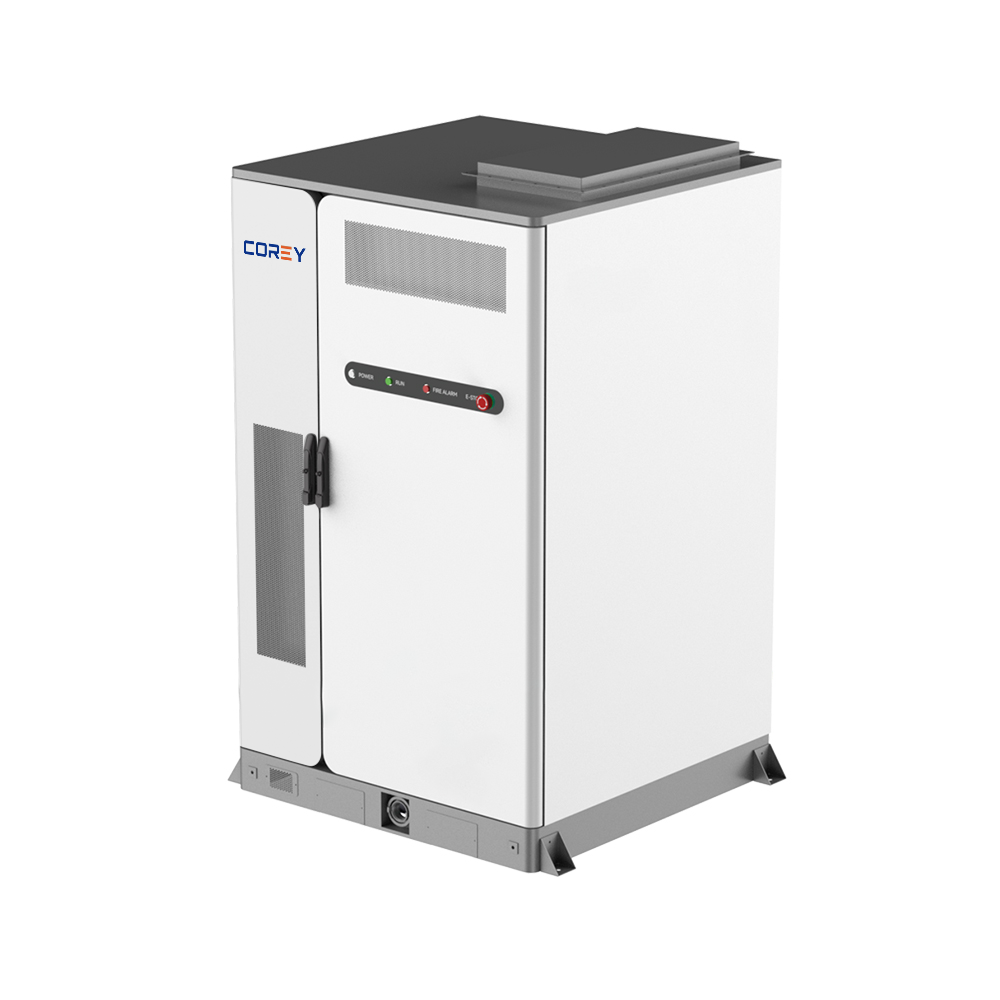
Lithium Iron Phosphate (LFP) currently dominates the commercial market. We consider it the absolute standard for cell chemistry. LFP provides superior thermal runaway resistance compared to older chemistries. It simply handles high temperatures much better. It also delivers a significantly longer cycle life. You will notice much lower degradation rates over a ten-year lifespan compared to NMC (Nickel Manganese Cobalt) alternatives.
Thermal management efficiency dictates system longevity. You must carefully evaluate liquid cooling versus forced air cooling. Liquid cooling systems ensure much tighter temperature deltas across individual cells. This precision remains critical for high-frequency cycling. It directly extends the operational lifespan of your entire asset. Forced air systems cost less upfront. However, they struggle to maintain uniform temperatures during heavy loads.
We must strictly evaluate physical safety and environmental defense. The enclosure acts as your primary shield. You must verify the specific IP ratings before purchasing. IP54 or IP55 suits indoor or mild outdoor environments perfectly. IP65 ratings become absolutely necessary for harsh outdoor installations. They actively prevent dangerous dust and moisture ingress. Furthermore, mandatory localized fire suppression systems must integrate directly into the cabinet architecture. We strongly look for reliable aerosol or water-based suppression systems.
Finally, evaluate the underlying operating system. The physical hardware remains only as good as its digital controller. The core control elements break down into two distinct categories:
Energy Management System (EMS): The central brain. It offers predictive load shifting. It reads utility pricing signals and decides exactly when to charge or discharge.
Battery Management System (BMS): The strict guardian. It actively balances individual cell voltage. It prevents overcharging. It also calculates the State of Health (SOH) and State of Charge (SOC) with pinpoint accuracy.
Internet of Things (IoT) dashboards enable highly efficient predictive maintenance. However, they also introduce severe grid-connected vulnerabilities. Your energy storage system operates as an active endpoint on the corporate network. Hackers often target these industrial control systems. You must strictly evaluate systems utilizing industry-standard cybersecurity protocols. ISA/IEC 62443 standards help prevent malicious remote tampering. They secure your operational data from external threats.
Permitting requirements add another complex layer. Local fire codes for energy storage evolve rapidly. Many systems lack proper cell-to-cabinet UL 9540A fire testing data. Authorities Having Jurisdiction (AHJs) will frequently reject these undocumented systems. Fire marshals demand rigorous proof of thermal stability. They need to see exactly how a potential fire behaves inside the enclosure. Without this specific UL 9540A report, your project will stall indefinitely.
Certification readiness separates amateur vendors from true professional partners. Shortlist vendors who willingly provide comprehensive documentation upfront. You will need detailed electrical schematics immediately. You also need precise thermal output reports and site-spacing guidelines. Having these documents ready heavily streamlines the local permitting puzzle. It prevents frustrating revisions and costly engineering delays.
Utility interconnection often becomes a long game of patience. Grid-tie approvals remain completely distinct from local building permits. Utility companies require extensive reviews of your telemetry systems. They also mandate rigorous protection scheme evaluations. They want to ensure your battery will not damage local grid infrastructure. These utility backlogs frequently cause major project delays stretching past six months.
Site infrastructure compatibility represents another hidden hurdle. You must carefully assess your existing switchgear and transformers. Many older buildings utilize outdated electrical panels. Upgrading these legacy systems can drastically alter your initial capital expenditure. A simple battery installation quickly becomes a massive facility upgrade. Always audit your electrical room before signing any hardware contract.
Finally, project success demands strict stakeholder alignment. You must manage internal expectations early in the process. Your facilities, finance, and operations teams must completely align on the primary use case. Their goals often conflict. Finance teams typically want to deplete the battery daily for rate arbitrage. Operations teams want to keep the battery fully charged for emergency backup power. You must prioritize one primary operational goal to ensure the software parameters match your business reality.
Selecting a commercial energy storage system is not a simple commodity purchase. It represents a highly strategic infrastructure integration. You are fundamentally changing how your facility interacts with the power grid. You must balance daily revenue generation against critical operational security. Carefully weigh your specific footprint limitations against your future expansion needs.
An optimized, pre-certified modular system often provides the best balance. It delivers exceptional performance while minimizing physical footprint. It also greatly accelerates your deployment speed for mid-to-large commercial operations. You avoid the heavy civil engineering delays associated with massive utility-scale installations.
Begin your procurement journey with a detailed interval meter data analysis. Request your 15-minute load profiles directly from your utility provider. Conduct a localized utility tariff review to understand your precise demand penalties. Only then should you issue an RFP to hardware providers. Clear data guarantees a properly sized, highly profitable storage deployment.
A: A commercial cabinet handles significantly larger capacities and manages robust three-phase commercial voltage. A residential system only handles single-phase power. Commercial systems also feature deeper EMS control for complex tariff arbitrage. Additionally, commercial hardware must pass extremely strict industrial fire code compliance standards that residential units do not require.
A: Yes. They act as an essential power buffer. A commercial battery allows multiple fast chargers to operate simultaneously without triggering massive utility demand penalties. It releases stored energy to the chargers. This prevents the need for multi-million-dollar transformer upgrades on older grid infrastructure.
A: Hardware lead times vary greatly by manufacturer. However, the actual bottleneck is usually AHJ permitting and utility interconnection. This makes the end-to-end timeline typically 6 to 12 months. Choosing pre-engineered, fully certified cabinets can drastically shorten the physical on-site installation phase to just a few weeks.


