
Views: 0 Author: Site Editor Publish Time: 2026-08-01 Origin: Site


Facilities worldwide face rising demand charges, grid instability, and an urgent shift toward renewable energy integration. These pressures drive a rapid adoption of energy storage solutions across various sectors. Procurement teams often struggle to forecast true project expenses. They see raw battery cell prices dropping sharply in recent reports from institutions like BNEF and Ember. However, fully installed system setups remain highly variable based on site engineering and compliance requirements. You need a reliable way to cut through the noise. This article provides a transparent, procurement-ready framework to evaluate capital and operational expenditures. You will learn how to move beyond basic hardware quotes and calculate genuine returns on investment. We will explore form factors, hidden fees, and evaluation strategies to guide your next energy deployment.
System Scale Dictates Price: Hardware costs typically range from $300 to $500+ per kWh, but fully installed projects often reach $600 to $800+ per kWh depending on infrastructure needs.
Hardware is Only Half the Cost: Balance of Plant (BOP), EPC (Engineering, Procurement, Construction), and grid interconnection fees often account for 40-50% of the total industrial energy storage cost.
Format Matters: Choosing between a modular C&I BESS Cabinet and a utility-scale Container BESS radically changes site prep, shipping, and installation costs.
ROI is Policy-Dependent: Subsidies (like the US ITC) and local utility rate structures (demand charges) are critical to offsetting initial capital expenditure.
Facilities investing in energy infrastructure must understand the core components of capital expenditure. The unit itself represents a significant portion of your budget. Core hardware relies heavily on modern battery modules. Lithium Iron Phosphate (LFP) chemistry currently dominates this space due to its strong safety profile and extended cycle life. You must also account for the Power Conversion System, which houses the critical inverters. These inverters dictate how efficiently DC power transforms into usable AC power for your facility.
The Battery Management System and Energy Management System act as the brain of the operation. They monitor cell voltages and optimize discharge cycles. Thermal management pairs with integrated fire suppression to ensure safe daily operation. Active liquid cooling systems offer superior temperature control but require robust initial setups. HVAC-based air cooling provides a simpler alternative for less demanding operational profiles.
However, you cannot ignore Balance of Plant and EPC expenses. Site preparation requires thick concrete pads, extensive underground trenching, and specialized security fencing. Switchgear, transformers, and electrical integration form the backbone of grid connectivity. Labor, specialized shipping, and heavy crane rigging add considerable overhead to the final invoice. Ignoring these elements skews initial budget forecasts significantly.
Finally, soft costs and compliance requirements demand careful attention. Permitting and Authority Having Jurisdiction approvals take time and engineering resources. Grid interconnection studies verify system compatibility before you connect to the local utility. Testing and commissioning validate performance before the system officially goes live. These steps ensure your system meets stringent regional safety mandates.
Below is a summary chart illustrating the typical capital expenditure distribution for large-scale energy deployments:
CAPEX Category | Typical Components | Estimated Proportion |
|---|---|---|
Core Hardware | Modules, PCS, BMS, EMS, HVAC, Fire Suppression | 50% - 60% |
Balance of Plant & EPC | Site prep, switchgear, transformers, labor, rigging | 30% - 40% |
Soft Costs & Compliance | Permitting, AHJ approvals, interconnection studies | 10% - 15% |
A common mistake involves judging a proposal solely by the core hardware line item. Best practices dictate requesting itemized quotes detailing every single EPC and compliance phase. This transparency protects your organization from unexpected mid-project expenses.
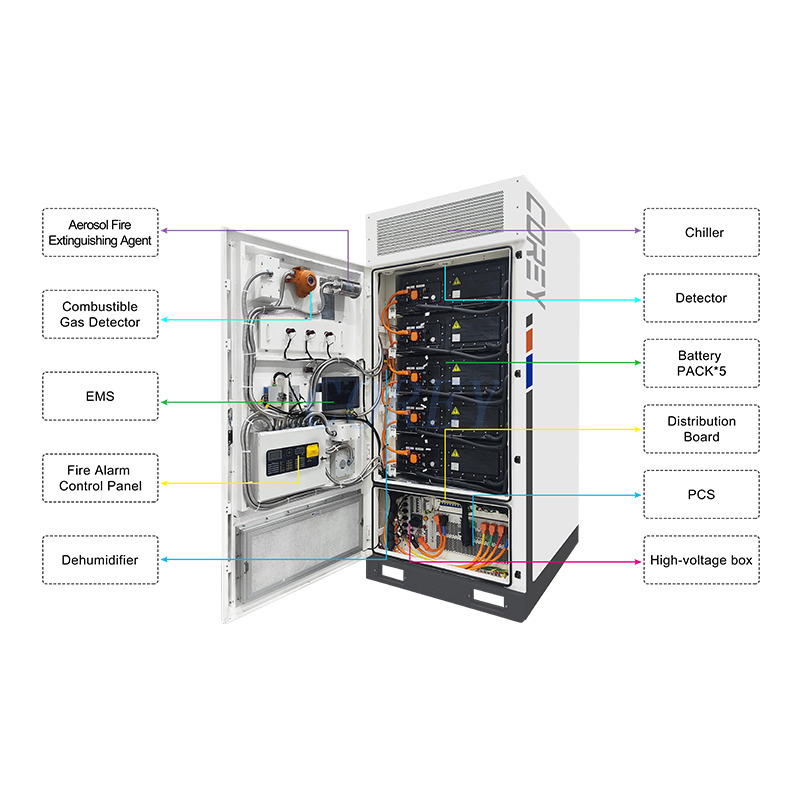
Form factor selection radically influences the overall commercial battery storage cost. You must align the system design directly with your specific facility requirements and spatial constraints. The physical footprint dictates logistics, installation complexity, and ongoing maintenance access.
A modular C&I BESS Cabinet typically ranges from 100kWh to 500kWh per unit. These compact systems perfectly target mid-sized manufacturing plants, busy retail centers, and modern EV charging depots. Their cost dynamics differ significantly from larger utility-scale installations. They often carry a higher per-unit hardware expense due to specialized dense packaging. However, they deliver significantly lower installation and Balance of Plant expenses. Their plug-and-play design drastically reduces on-site EPC labor hours. You simply place them on standard foundations, connect them to existing switchgear, and begin commissioning quickly.
Conversely, a large-scale Container BESS operates at 1MWh and above. Heavy industrial plants, front-of-the-meter utility applications, and massive solar-plus-storage projects rely on these robust units. Cost dynamics shift toward powerful economies of scale here. The hardware expense per unit drops considerably because components scale up efficiently. However, deploying them requires heavy, expensive infrastructure. You will need high-capacity cranes, wide access roads, and large custom concrete foundations. Complex thermal management networks inside the enclosure drive up absolute project expenditures.
When choosing between these formats, consider the future scalability of your site. Cabinets allow you to easily daisy-chain additional units as facility load grows over time. Containers represent a more rigid, centralized commitment upfront. Careful spatial auditing prevents costly layout revisions later.
Buyers frequently overlook ongoing operational expenditures during the initial procurement phase. Over a typical 10 to 15-year lifecycle, capacity degradation demands strategic financial planning. Batteries naturally lose charge retention capacity over time due to continuous cycling. Budgeting for future module augmentation maintains your guaranteed energy levels. Augmentation involves adding new battery racks to existing systems to offset natural cell degradation.
Routine maintenance and warranties form another critical expense layer. HVAC systems require regular filter replacements and compressor servicing. Liquid-cooled setups need periodic coolant flushes to prevent internal corrosion. You should secure extended manufacturer warranties and robust service level agreements early. These agreements protect you from catastrophic hardware failure and ensure rapid technician dispatch.
Software and connectivity introduce ongoing fees you must track. Advanced EMS platforms require active annual licensing. Predictive analytics and cloud monitoring systems depend on continuous data streams to optimize performance. These digital tools maximize your savings but carry recurring subscription models. Do not assume software access remains free indefinitely.
Parasitic load quietly impacts your net return. The system consumes its own stored energy to run cooling loops and control mechanisms. You must account for this internal energy draw when projecting actual usable output. In extreme weather environments, thermal management works harder, increasing parasitic losses substantially.
Best practice: Always request net discharge figures from vendors, rather than gross capacity numbers. This ensures your ROI calculations reflect the exact power delivered to your facility panels.
Evaluating financial returns requires a clear look at revenue generation and savings mechanisms. You must leverage multiple value streams to offset the initial industrial energy storage cost. Peak shaving often serves as the fastest ROI driver for commercial facilities. Facilities discharge batteries during peak billing periods to artificially flatten grid consumption. This strategy directly targets aggressive utility demand charges, saving thousands monthly.
Time-of-Use energy arbitrage offers another powerful strategy. You charge the system during late-night off-peak hours when utility rates drop significantly. You then discharge the stored power during expensive afternoon on-peak hours. This simple shift creates a reliable daily margin. Grid services and demand response programs provide additional revenue. Regional utilities often pay facilities directly to reduce load during critical grid stress events.
Incentives and tax credits fundamentally alter the financial equation for new deployments. Navigating the Federal Investment Tax Credit provides substantial capital relief. Facilities meeting specific labor and manufacturing criteria unlock even higher percentage returns. Domestic content bonuses can further enhance these federal benefits, driving down upfront burdens.
State-level rebates offer localized financial support. Programs like California’s SGIP provide direct cash incentives based on installed capacity and operational intent. You must engage specialized tax consultants to capture these benefits fully. Failing to file pre-application paperwork often disqualifies projects from receiving these critical funds.
Procurement teams must critically analyze integrator proposals to avoid expensive surprises down the road. You must ensure every quote separates hardware, EPC, and software line items clearly. Beware of lump-sum estimates that hide inflated integrator margins. Demand an apples-to-apples comparison framework when reviewing multiple vendor bids.
Compliance verification remains absolutely non-negotiable. Ensure all quoted systems meet strict UL 9540 and NFPA 855 safety standards. These frameworks dictate fire propagation testing and safe installation distances. Non-compliance will halt projects during municipal inspection and inflate retrofitting budgets severely.
Watch for these specific red flags during your technical evaluation:
Overly optimistic degradation curves ignoring real-world daily cycling realities.
Exclusion of grid interconnection fees or local municipal permitting expenses.
Lack of clarity regarding exactly who handles the final commissioning process.
Vague service level agreements missing defined response times for critical faults.
Before requesting final binding quotes, take these critical next steps to protect your investment:
Initiate a detailed facility load profile analysis using recent utility interval data.
Conduct a comprehensive site audit to verify spatial constraints and access routes.
Assess existing electrical infrastructure and switchgear for required capacity upgrades.
Align your operational goals strictly with the proposed software capabilities.
By enforcing rigorous evaluation standards, you filter out inexperienced vendors. Focus heavily on integrators demonstrating a proven track record of successful localized deployments.
Total project expenditure represents a complex equation blending hardware scale, site readiness, and long-term operational strategy. Evaluating an investment requires looking far beyond the initial invoice. Procurement teams must account for site preparation, grid interconnection, and ongoing maintenance. Understanding spatial constraints, regional compliance mandates, and revenue-generating opportunities ensures long-term project viability.
Do not base decisions solely on the lowest hardware quotation available. You must evaluate the entire operational lifecycle and the execution track record of your chosen integrator. Factor in tax incentives, parasitic load, and eventual capacity augmentation. Contact our engineering team today for a site-specific load analysis and a transparent, itemized system estimate.
A: Payback periods typically range from three to seven years. Focus on local variables like utility demand charges, peak rate structures, and ITC eligibility. Facilities in regions with high peak-hour tariffs often see the fastest returns.
A: Cell prices have stabilized at historic lows recently. However, Balance of Plant components and skilled labor expenses continue to rise. This dynamic means total installed project expenditures will likely remain steady despite cheaper raw battery materials.
A: Yes. You can explore alternatives to upfront capital purchasing. Energy-as-a-Service models and Power Purchase Agreements allow facilities to install systems with minimal initial investment. These structures share the generated savings between the facility and the project developer.


